
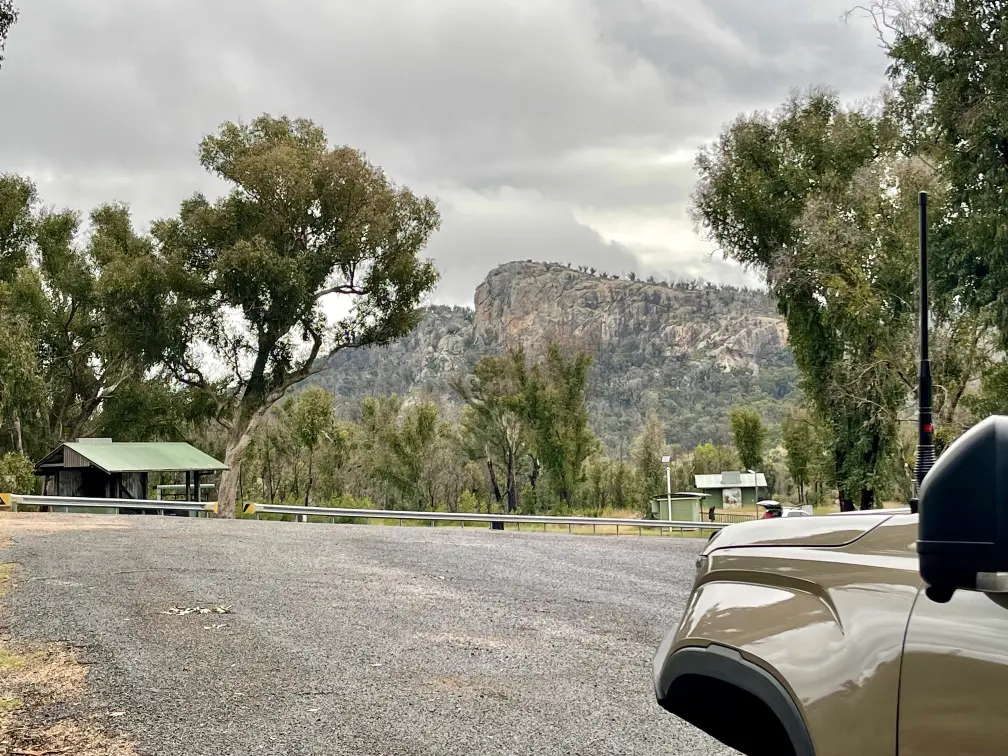
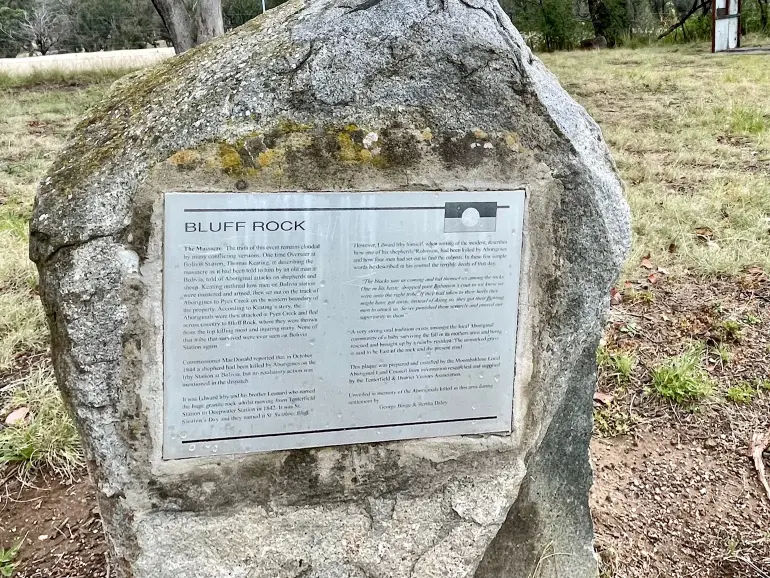
Bluff Rock
Overnight at Bluff Rock Rest Area
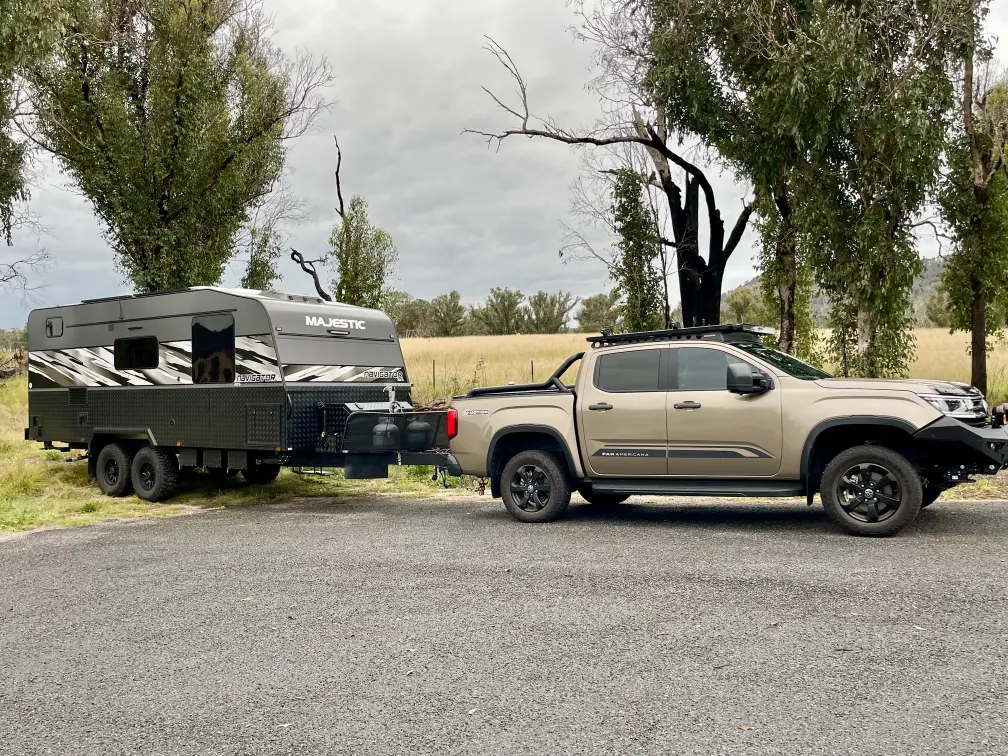
We found a convenient rest stop off the New England Highway, just after Stanthorpe. Due to the approaching heavy rain and storms, we decided to stay on the paved road overnight to avoid getting the caravan stuck on our first night away. The rest stop includes a toilet and two covered areas with fireplaces. Although it’s a small area with a slight slope, there’s enough space to park a caravan. If you position the caravan in the right-hand corner and place the wheels on the grass, the slight increase in height can help level the van.
Deepwater
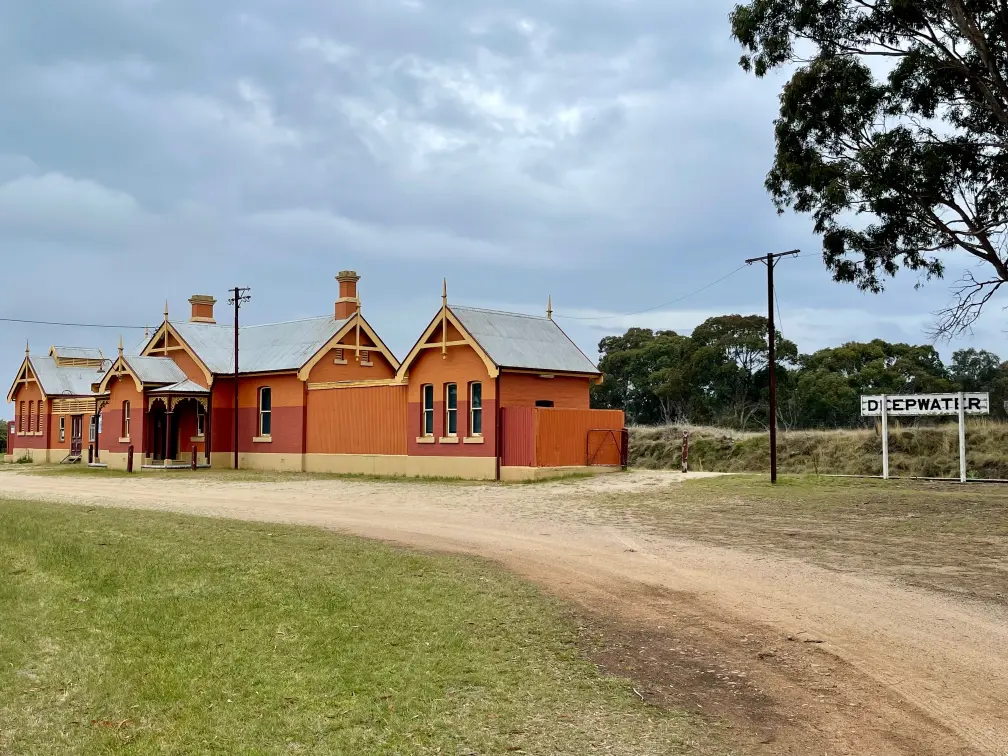
Stopped at Deepwater Township for water, coffee and cake.
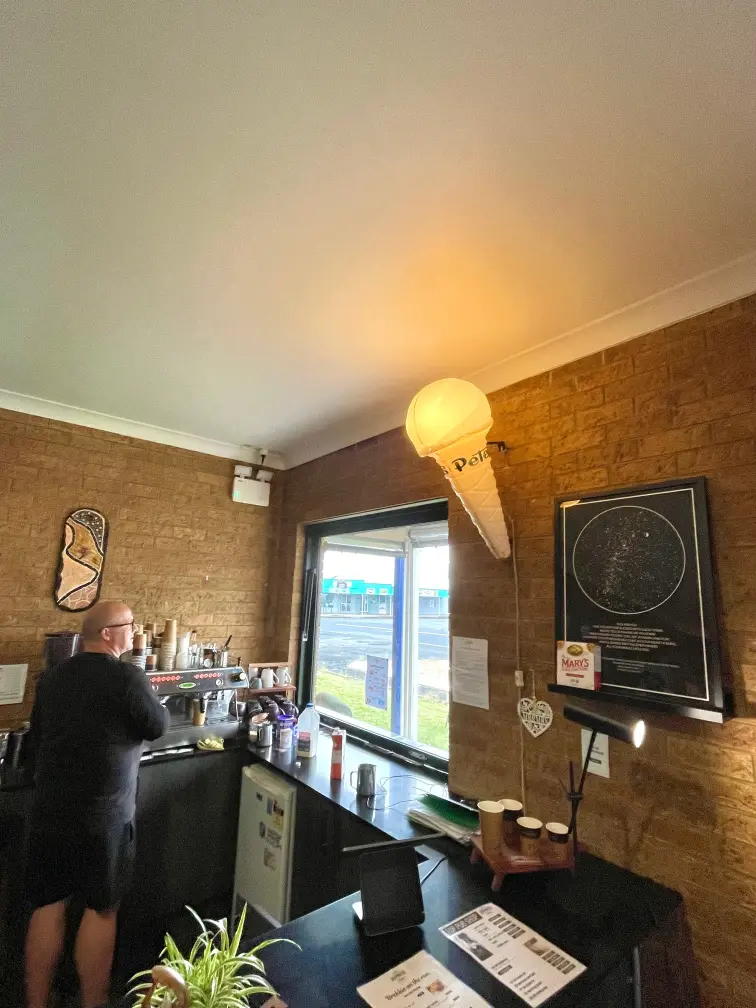
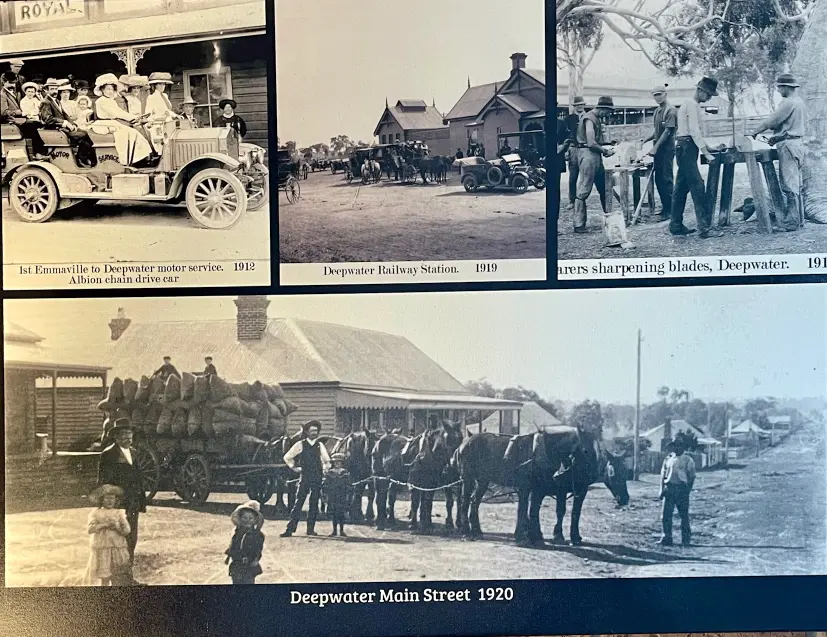
Deepwater rest stop is a great place to fill up with water and stop at the local bakery for cake. We wandered through town, bought some fresh veggies and fruit from the local vendor, and then headed up to the local pub and coffee shop. The pub lounge has some interesting 1920s pictures on the wall, and the coffee area has an old Peters ice cream light above the counter, which has been hanging there for the last 30-plus years. The locals are welcoming and friendly. Armed with our coffees, we took a stroll to the Deepwater Historical Railway Station. The railway is heritage-listed and in need of repair. I hope one day it gets the attention it deserves.

Glen Innes
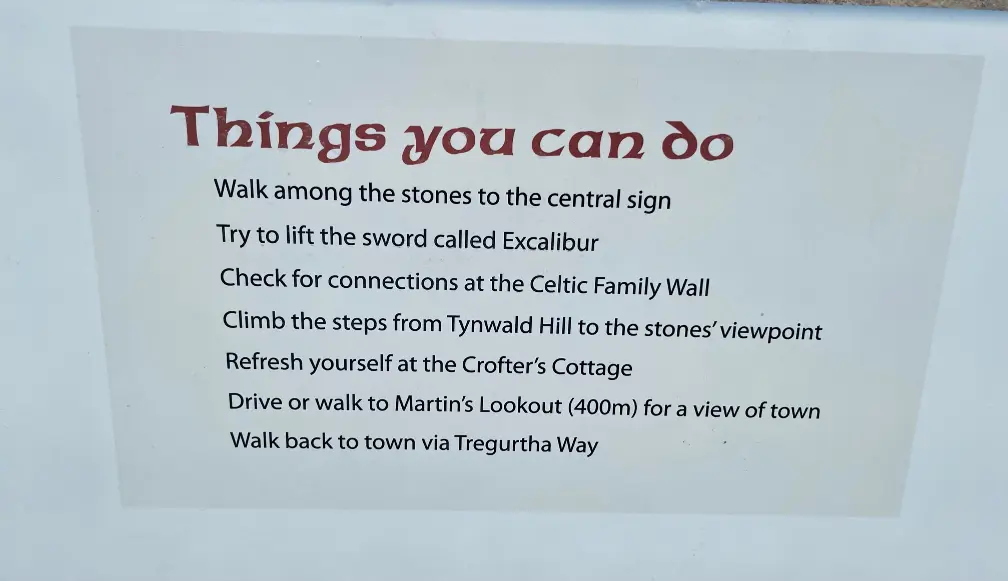
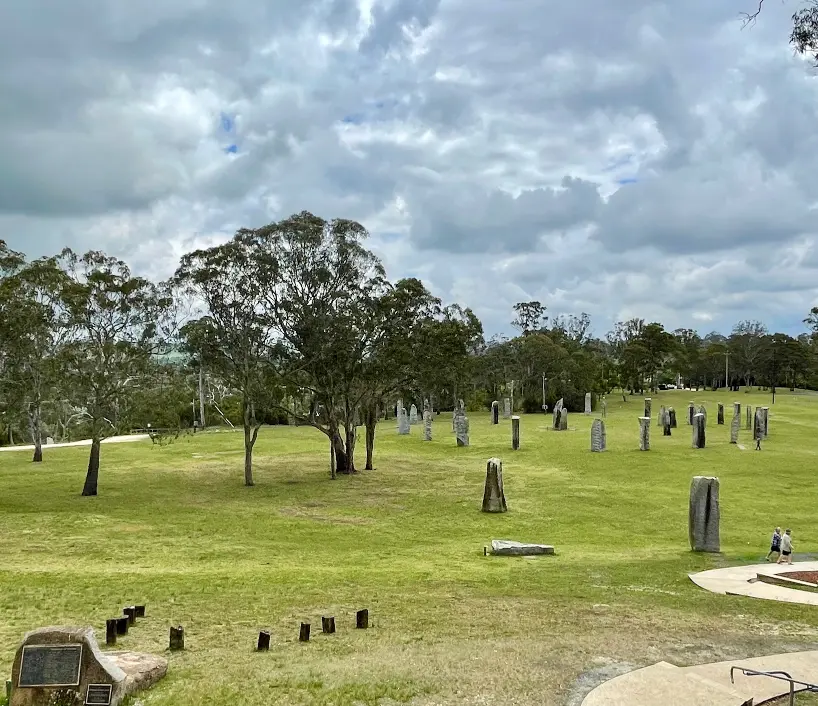
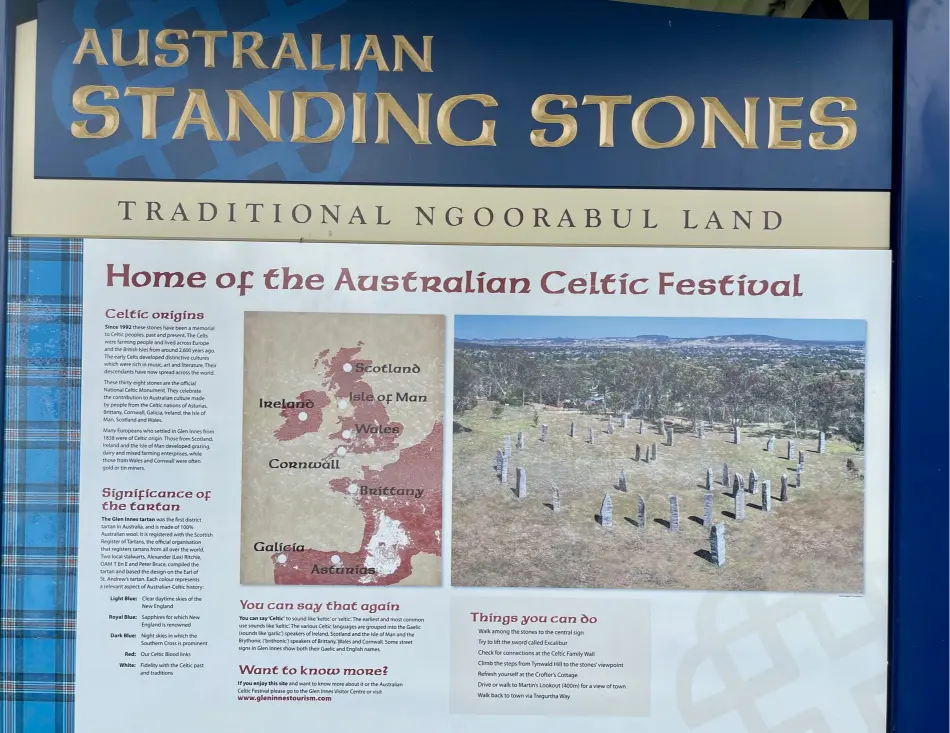
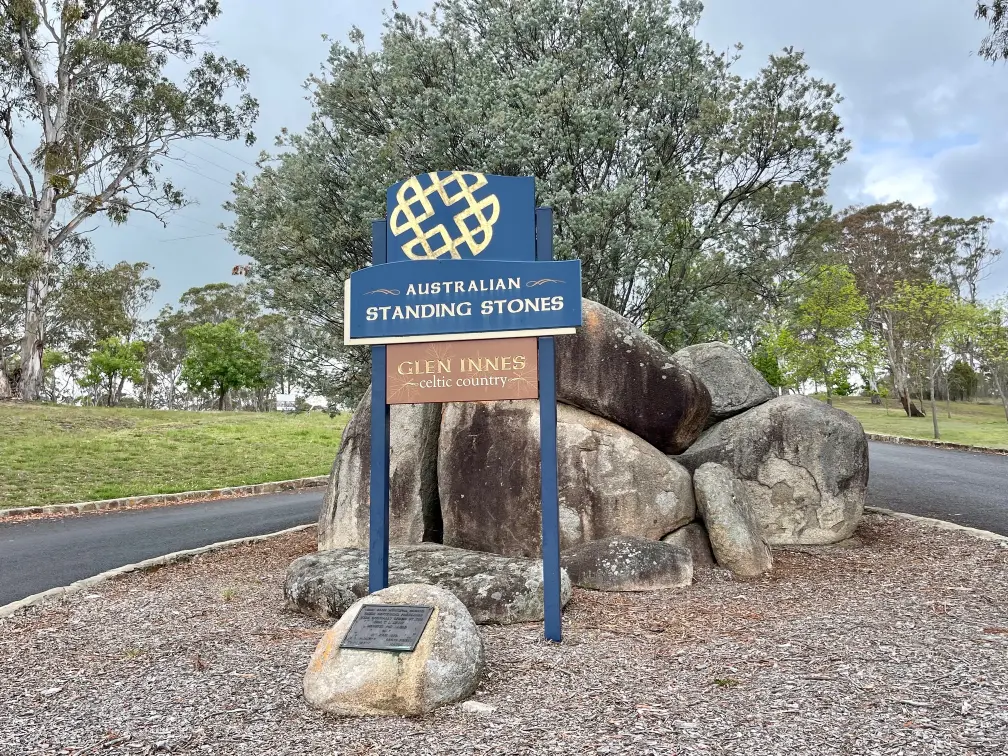
The early settlers in Glen Innes (1838) were of Celtic origin. Make sure you stop by a point of interest in Glen Innes to find out about the Celtic symbolism of the stones placed there.
These stones represent features of early Celtic life and celebrate the Celtic nations whose descendants contributed to Australian life and culture, including Asturias, Brittany, Cornwall, Galicia, Ireland, the Isle of Man, Scotland, and Wales. Those from Scotland, Ireland, and the Isle of Man developed grazing, dairy, and mixed farming enterprises, while those from Wales and Cornwall were often gold or tin miners.
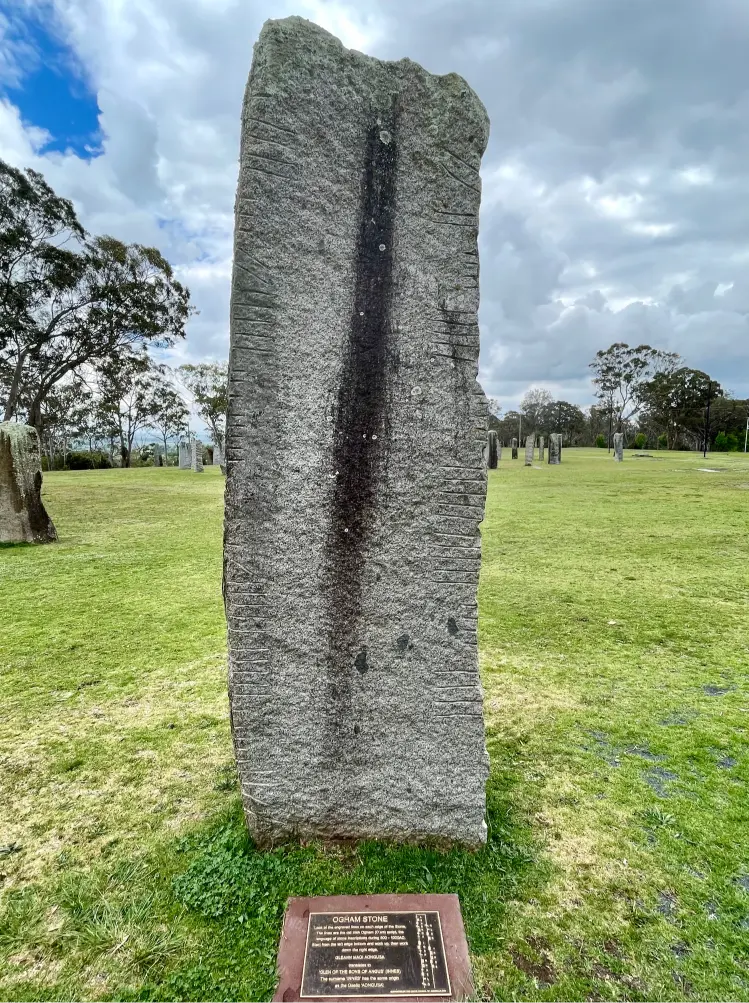
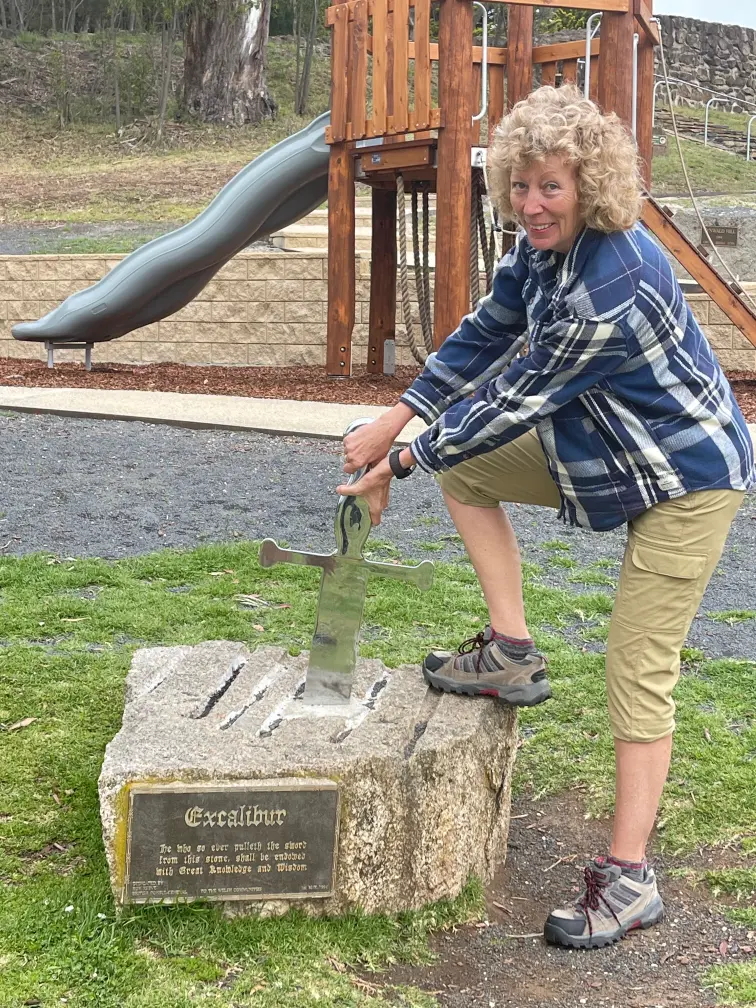
It’s a very interesting place to visit. Plaques portray the fascinating history of their placement. I tried to pull the sword, as history dictates that if successful, I would be endowed with knowledge and wisdom. Unfortunately, it wasn’t my day. You may have better luck than me. Check out the Ogham stone; each of the lines represents a letter and spells a name.
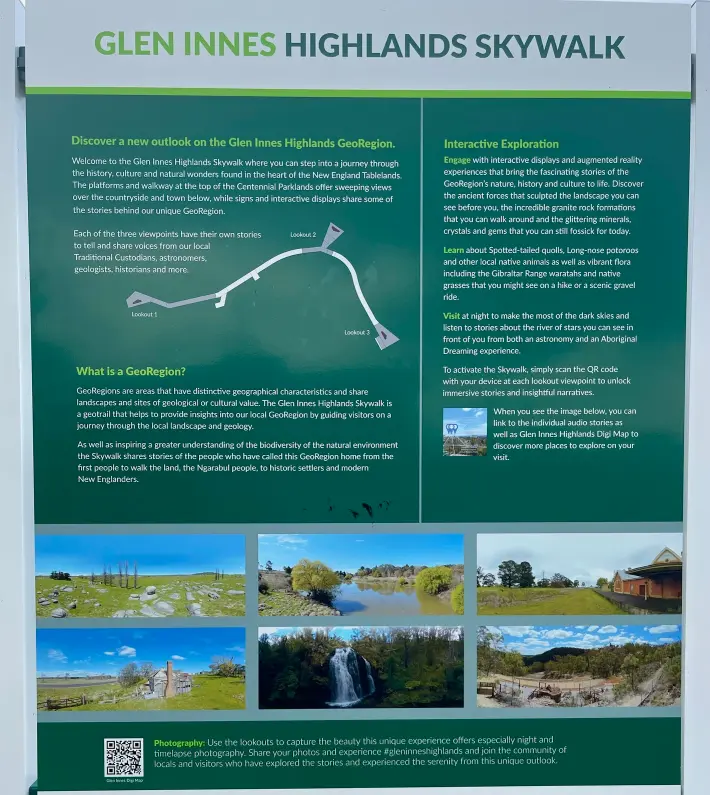
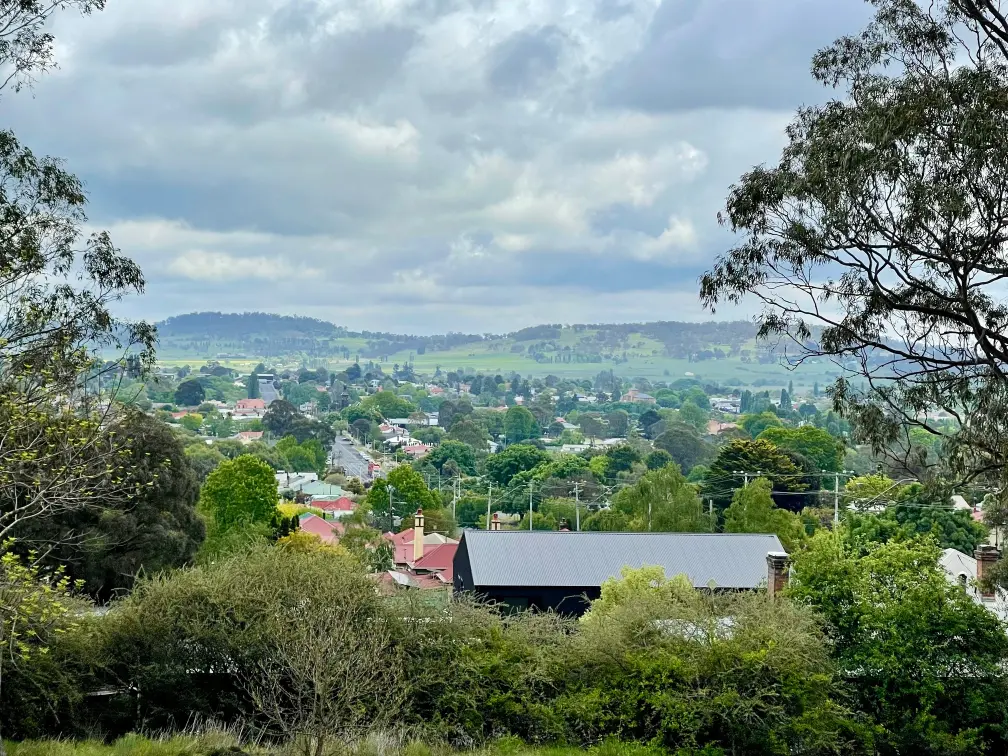
Don’t forget to explore the Glen Innes Skywalk further up the hill. Glen Innes is a truly picturesque place. The recent rain has contributed to the beautiful green grass, spring flowers, and new leaf growth on trees.
Uralla
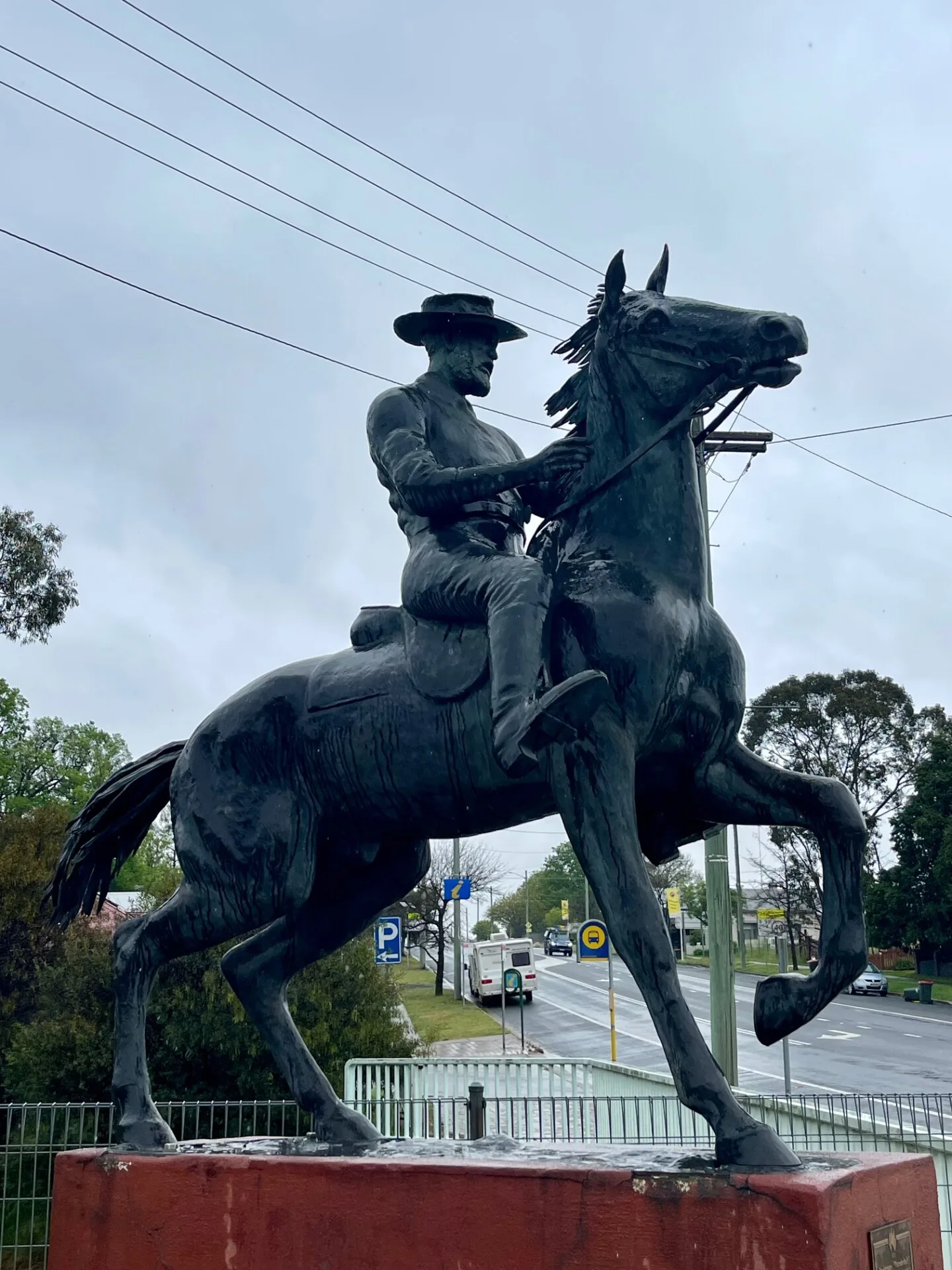
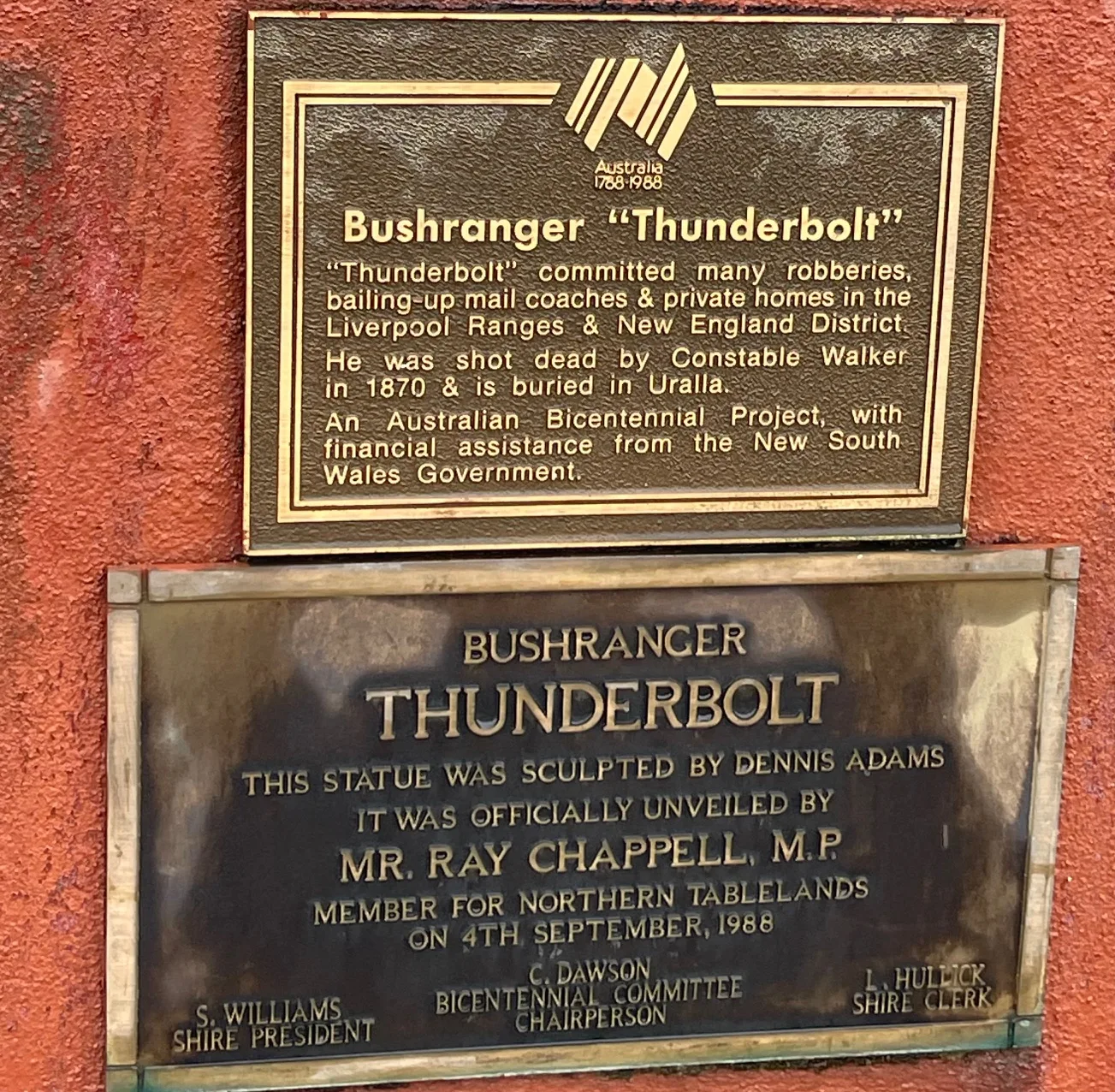
Uralla—The Bushranger Thunderbolt statue is a landmark you won’t want to miss during your visit to Uralla. It’s worth a stop.
Bushranger Thunderbolt was notorious for committing numerous robberies in the Liverpool Ranges and the New England District until he was shot dead in 1870. Just a short walk across the road, the historical museum showcases various paintings and tells the story of his exploits, detailing the robberies he carried out and how he deceived people. Be prepared for some extensive reading!
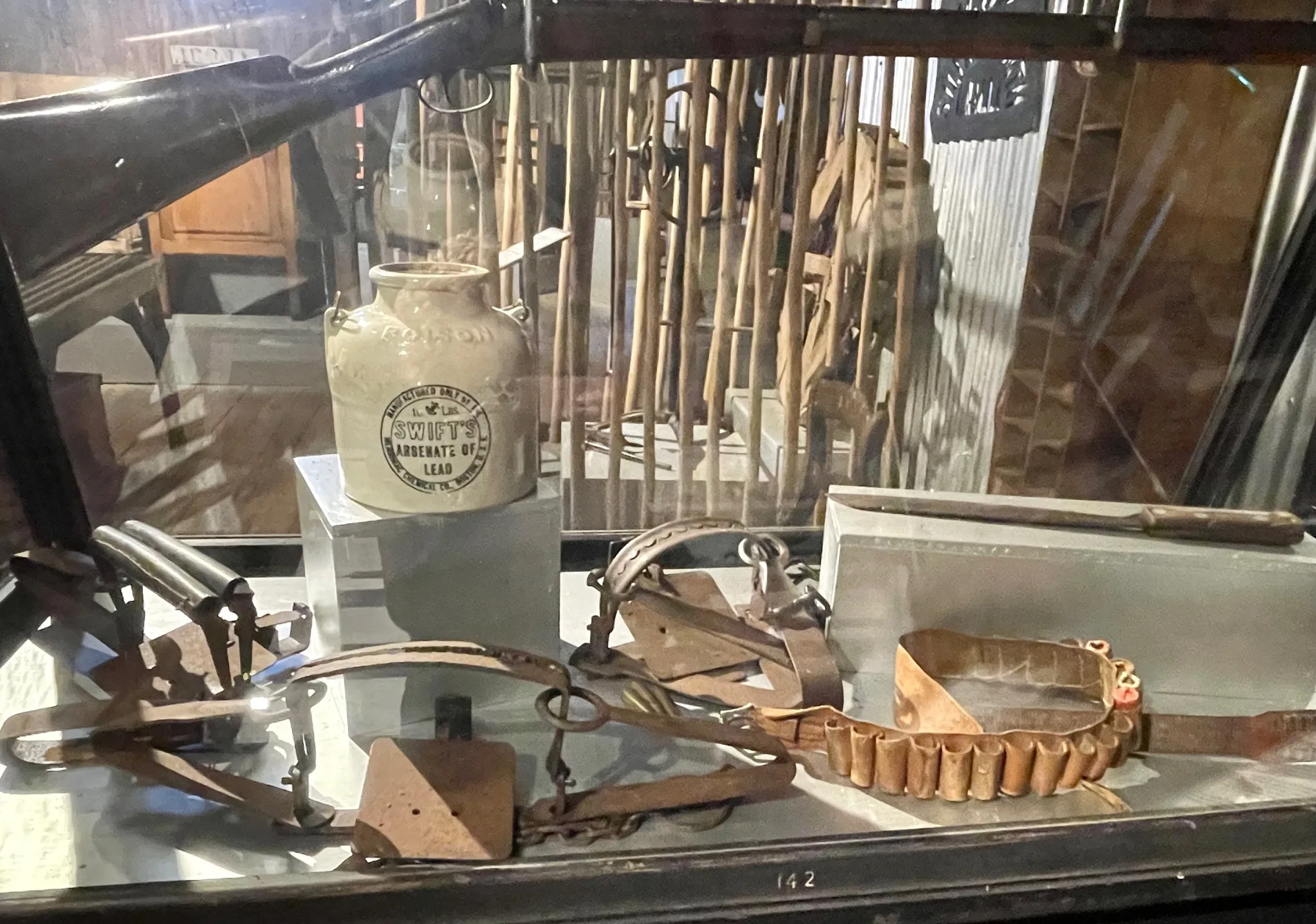
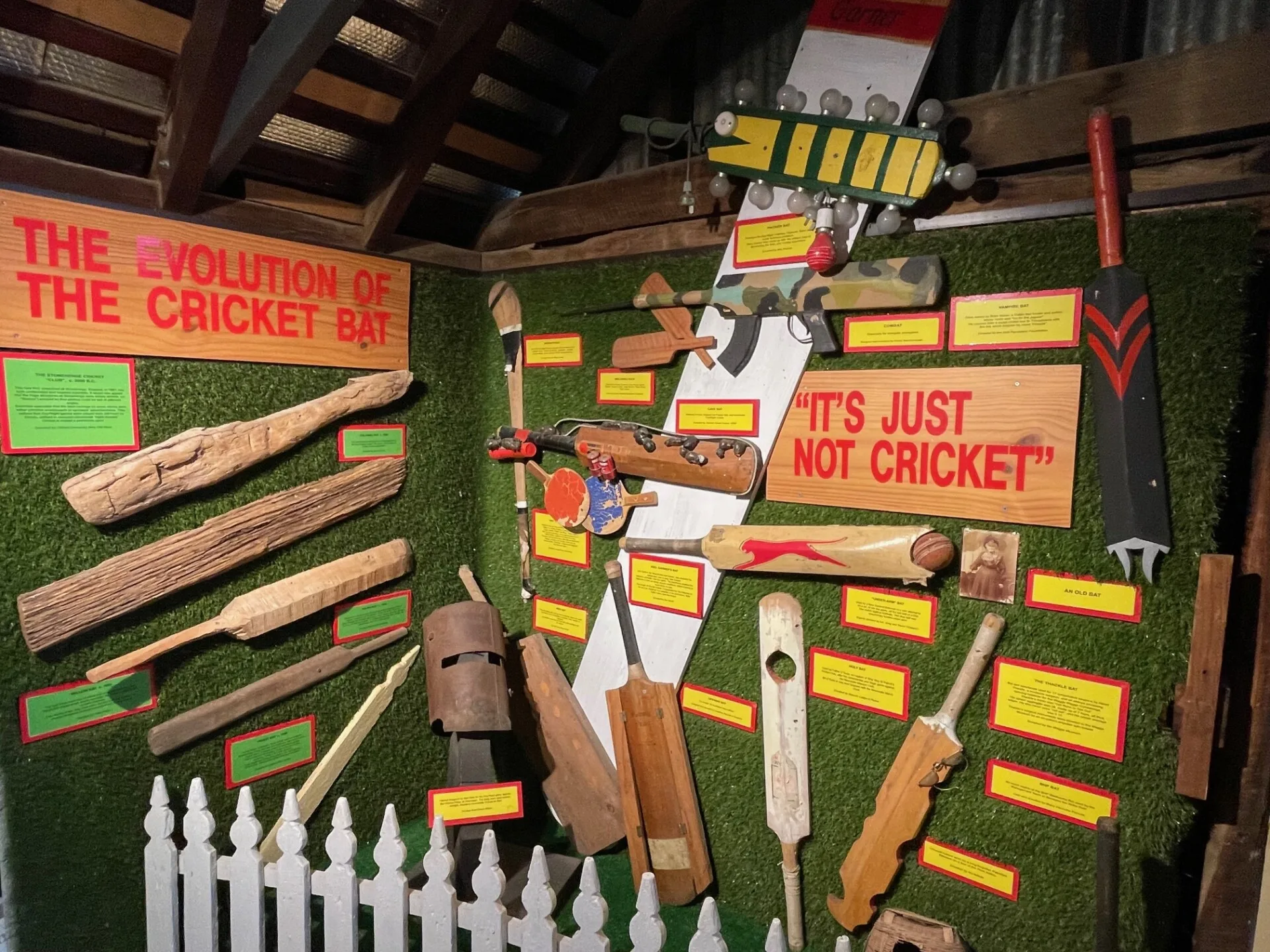
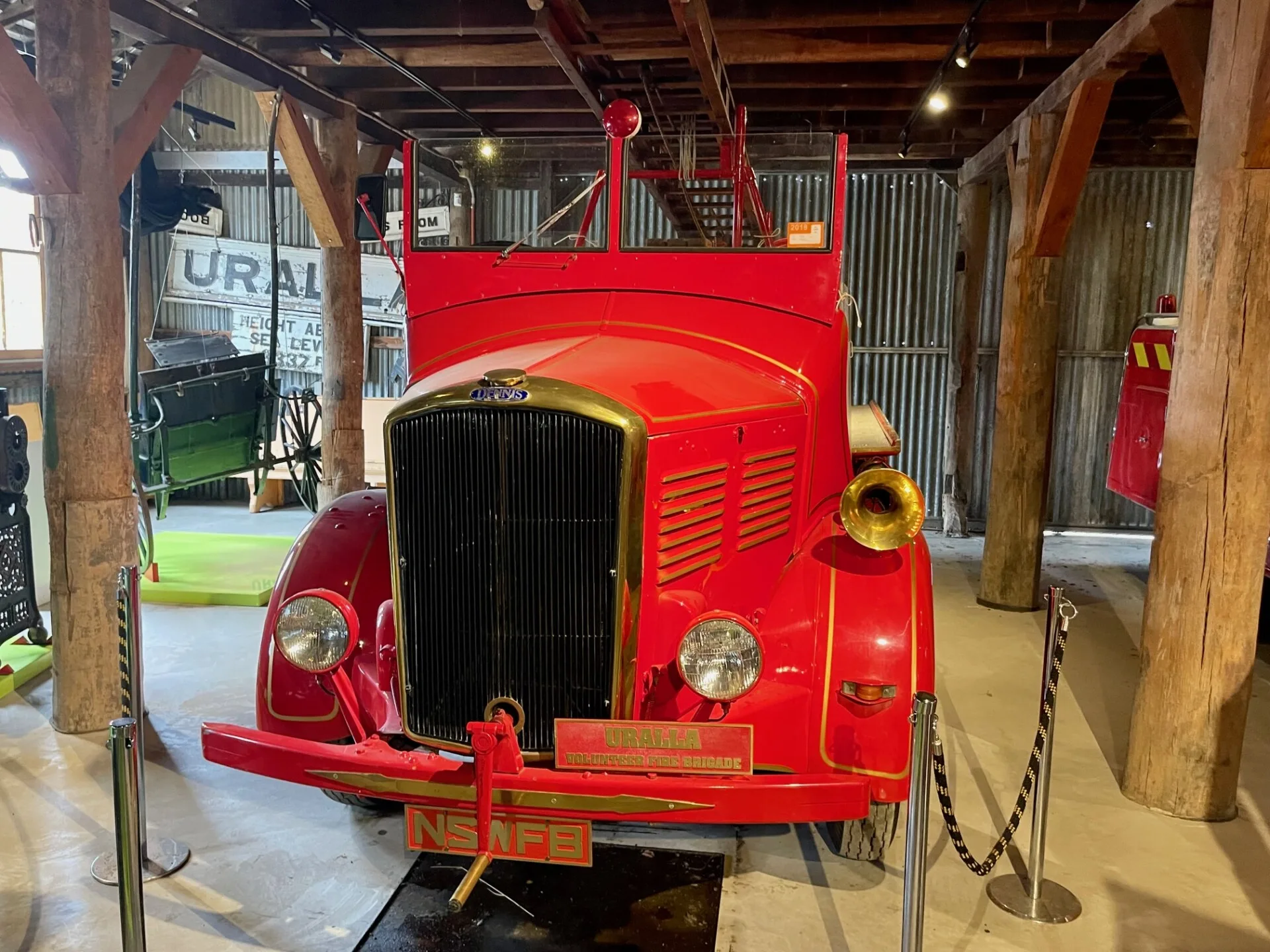
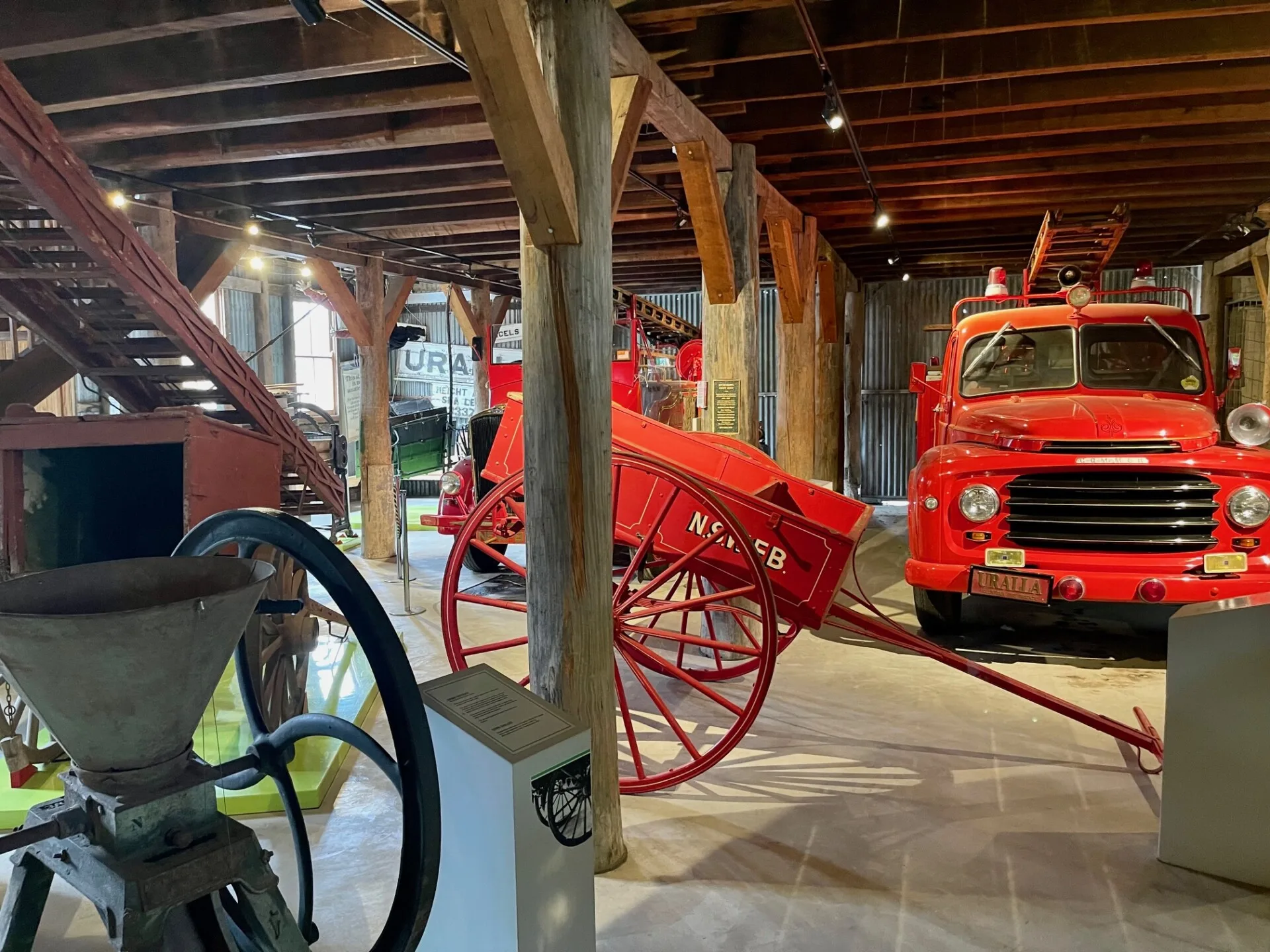
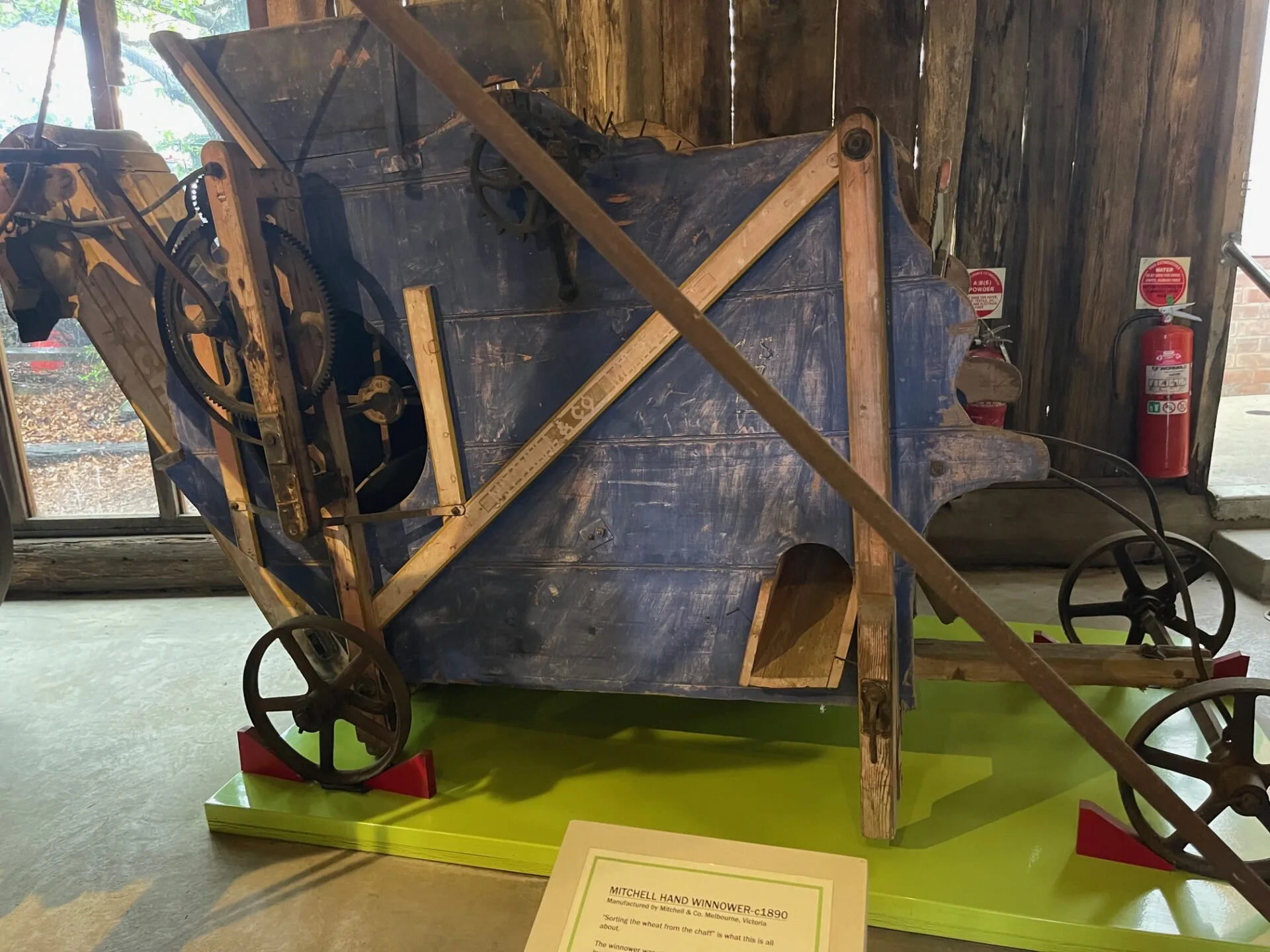
The museum features an intriguing display of 1870s farm wagons and a vibrant red 1932 Uralla fire engine. If you’re interested in cricket, you might enjoy the display showcasing the evolution of cricket bats. This museum has many fascinating items, allowing you to learn about the real challenges faced by Pioneers in the New England region.
You can also explore the challenges faced by Aboriginal people and Chinese migrants during this period.
Officially, Europeans were expected to show kindness and protectiveness toward the Aborigines; however, in reality, there was constant conflict between squatters and the native people.
Chinese immigrants, primarily young men seeking a better life, paid for their passage to Australia. When gold was discovered in Ballarat and then Bendigo, thousands of Chinese flocked to the so-called “New Gold Mountain.” To limit the influx, the Victorian government imposed a poll tax of ten pounds per person. To avoid paying this tax, British merchant ships landed Chinese immigrants at nearby South Australia, from where they would then walked to the Victorian goldfield’s