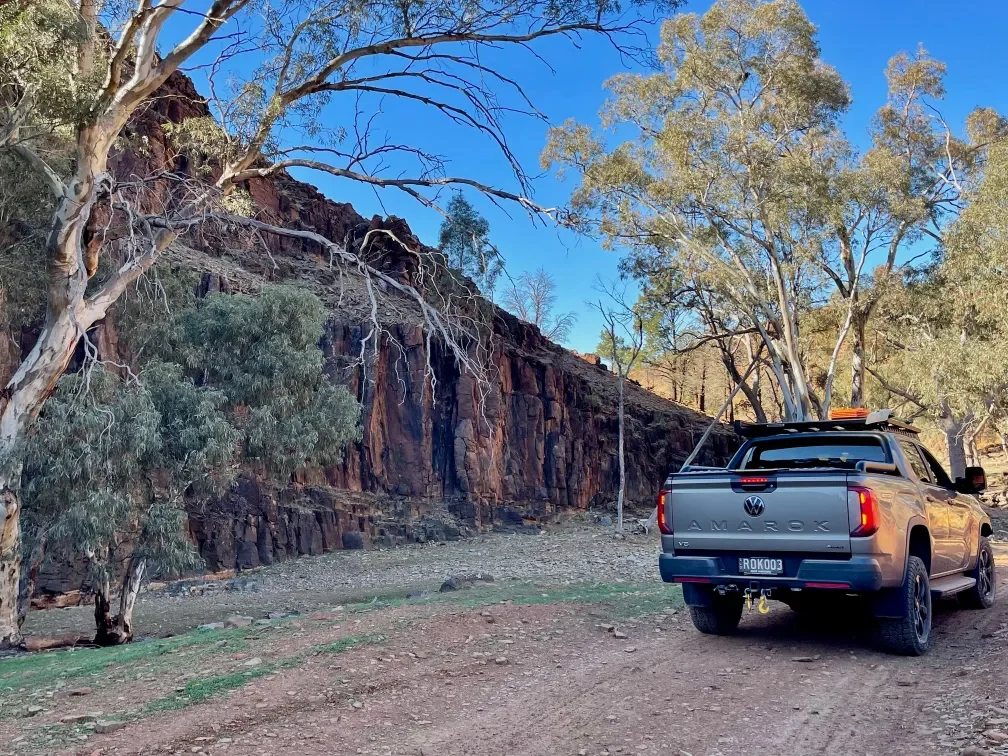

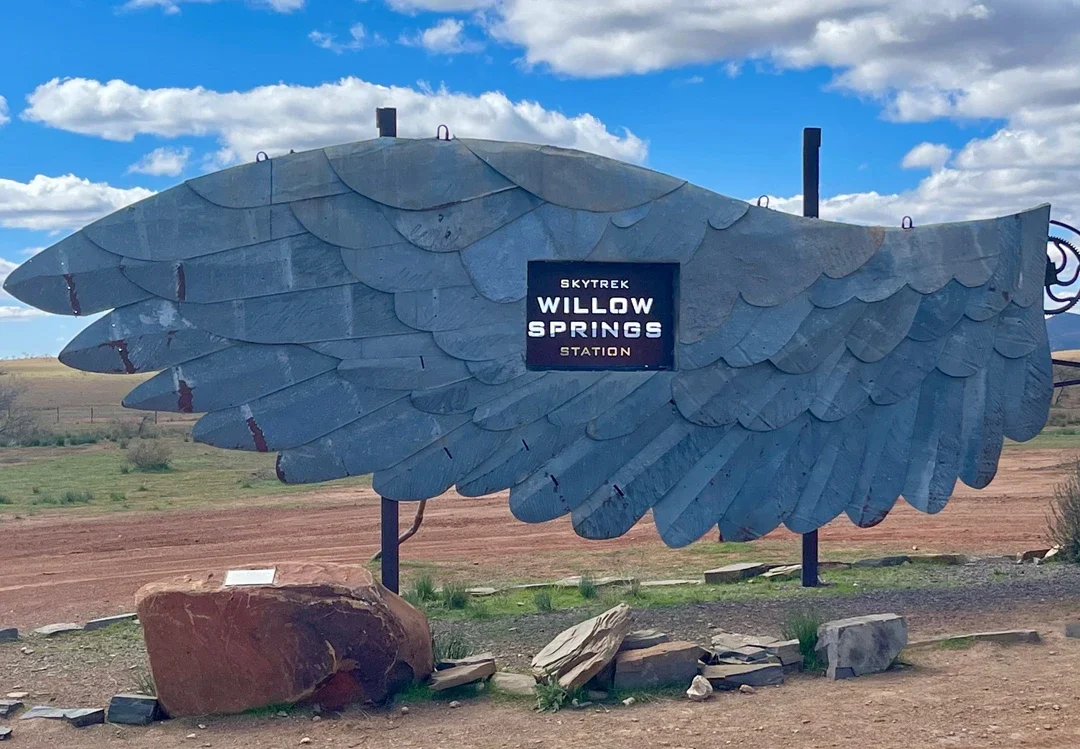
Willow Springs has been a cattle and sheep station since the 1860s, spanning an impressive 70,000 acres! We’d been hearing about the Willow Springs Skytrek Trail from fellow travellers and YouTubers for a couple of years, so it was always on our radar. We were so excited to finally make it to the Flinders Ranges and experience the Skytrek 4WD trail for ourselves.
When we checked in, the friendly staff warmly welcomed us and briefed us on everything we needed to know about the Skytrek Trail. They provided us with a map and a numbered itinerary, explaining that the trail typically takes about 7 to 8 hours to complete.
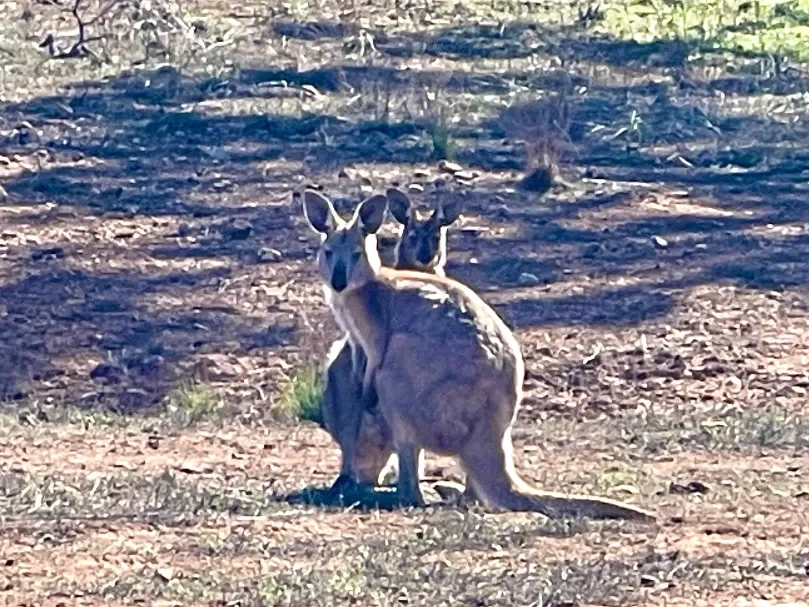
As we set up our campsite, we were thrilled by how spacious it was! It’s a lovely bush camp, completely off-grid with no power or water, but we had our water tanks filled and the amenities were conveniently close by. Each morning, we were greeted by lovely visits from ring-neck parrots and Apostle birds who brought a smile to our faces!
On the morning of our trail adventure, it was chilly at 2 degrees— thank goodness for our cozy diesel heater! After packing a delicious picnic, we excitedly set off to the trailhead.
We set our trip meter to follow the itinerary along the way. The trail has distances and numbered points of interest, so it’s easy to track where you are.
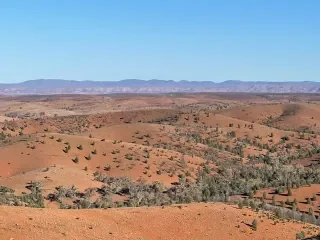
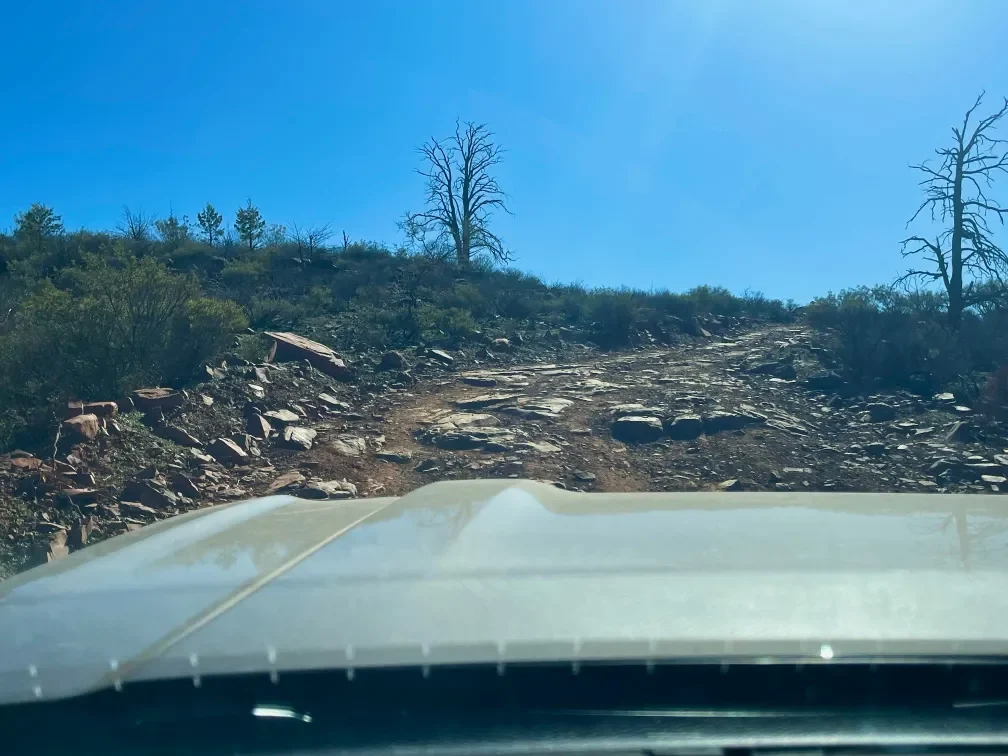
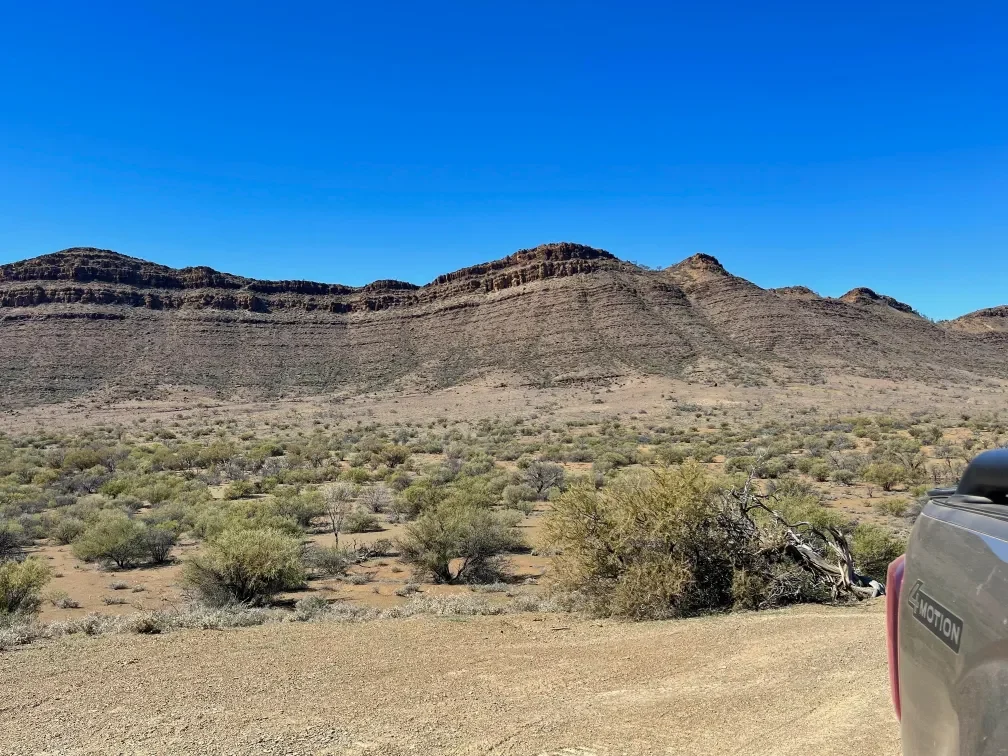
The track starts at a nice, leisurely pace, perfect for getting into the groove! As you make your way through stunning ancient sea beds and beautiful ochre cliffs, you’ll encounter a rugged section of the trail known as the bunkers. It really adds to the adventure! Just wait until you reach the steep ascent to the top of the hills; navigating over some of the bigger rocks can be tricky, so having a buddy to spot you through the tougher rocky patches can be helpful.
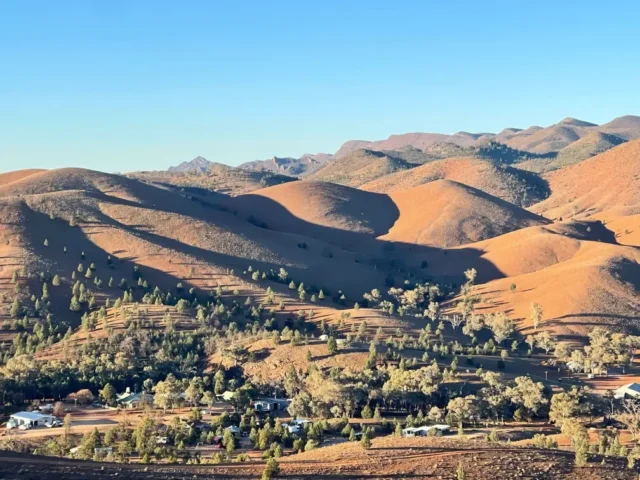
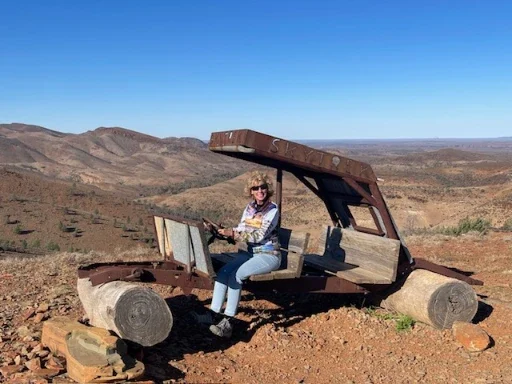
We also recommend equipping your vehicle with a lift kit—it’s a great way to keep everything safe and sound. Driving through the hills is such a joy! You’ll notice the vibrant colours of the hills and mountain ranges changing throughout the day as you travel along. There are countless spots to pause and soak in the breathtaking scenery. Honestly, for us, this was a fantastic experience!
If you’re visiting the Flinders Ranges, consider adding it to your must-do list.
More about the Flinders:
The rocks that form the Flinders Ranges were initially laid down as sediments in a large marine basin between 800 million and 510 million years ago. During these 300 million years, the basin filled in with up to 24km of sands, silts and limestone. As they were buried deeper and deeper, the sediments were compressed and hardened into rock, and later folded into a high mountain range. Erosion of these mountains since then has resulted in the ranges we see today.
Information sourced from: Geology of the Flinders Ranges National Park, Government of South Australia, Primary Industries and Resources, Department for Environment and Water and Earth Sciences, South Australian Museum