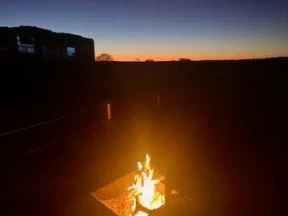
We turned off the Stuart Highway onto Ernest Giles Road, an 80-km stretch of dirt road. We travelled 15km, then turned off and drove for 5 km to reach the Reserve. Although we encountered a few washouts and bumps along the way, the road was in fair condition, even after some rain.
We chose campsite 1, which was great because we could park at an angle and stay hitched up. It’s a small, cozy camping area with four sites.
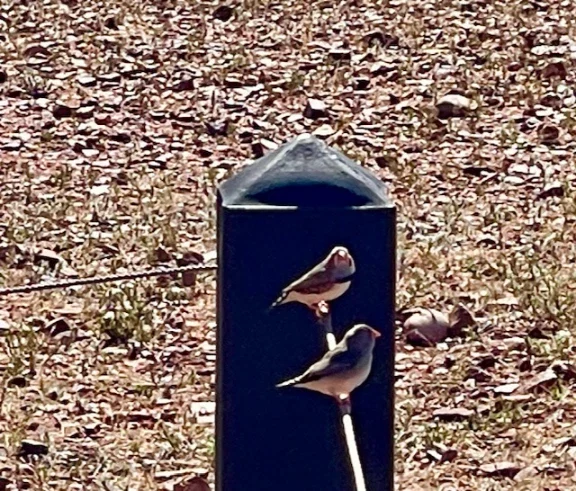
While preparing lunch inside the caravan, we heard the delightful pitta-patta sound of little bird feet dancing on the roof! It turned out to be a charming female Zebra Finch on the hunt for her next snack. We’re not quite sure what we collected along the way, but whatever it was, she seemed to love it!
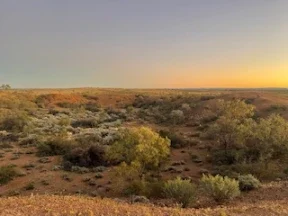
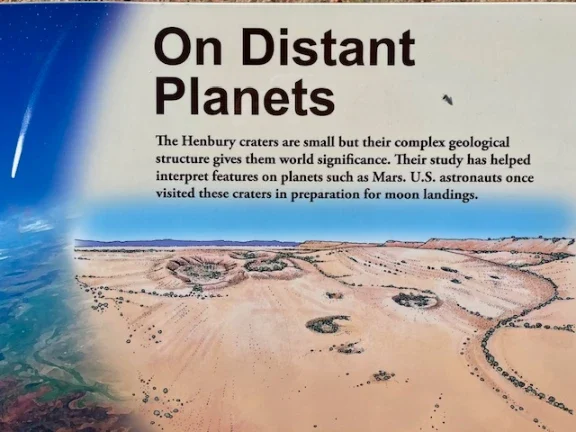
After lunch, we walked to the craters. What a fascinating place! Over the years, the wind and rain have smoothed out the craters’ once-sharp edges, creating the unique landscape we see today.
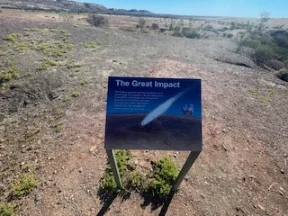
About 4,000 years ago, a massive meteorite zoomed in at over 40,000 kilometres per hour before breaking apart and hitting the earth at Henbury. The four largest chunks created the prominent craters you can see now. Each piece was roughly the size of a 200-litre fuel drum and left a crater that big – pretty unbelievable, right? Even more intriguing is that eight smaller fragments left little craters to the south-west. Over the years, people have found hundreds of kilograms of meteorite material here, with the largest piece weighing over 100 kg!
Walking around, we noticed how the rain had washed down nutrients and sediments from the crater walls, forming a claypan-like surface. The crater walls have pretty saltspoon daisies and vibrant Pink Mulla Mulla flowers. You’ll also find Old Man Saltbush thriving in the nutrient-rich soil on the crater floor. It’s such an interesting spot, full of nature’s wonders!