

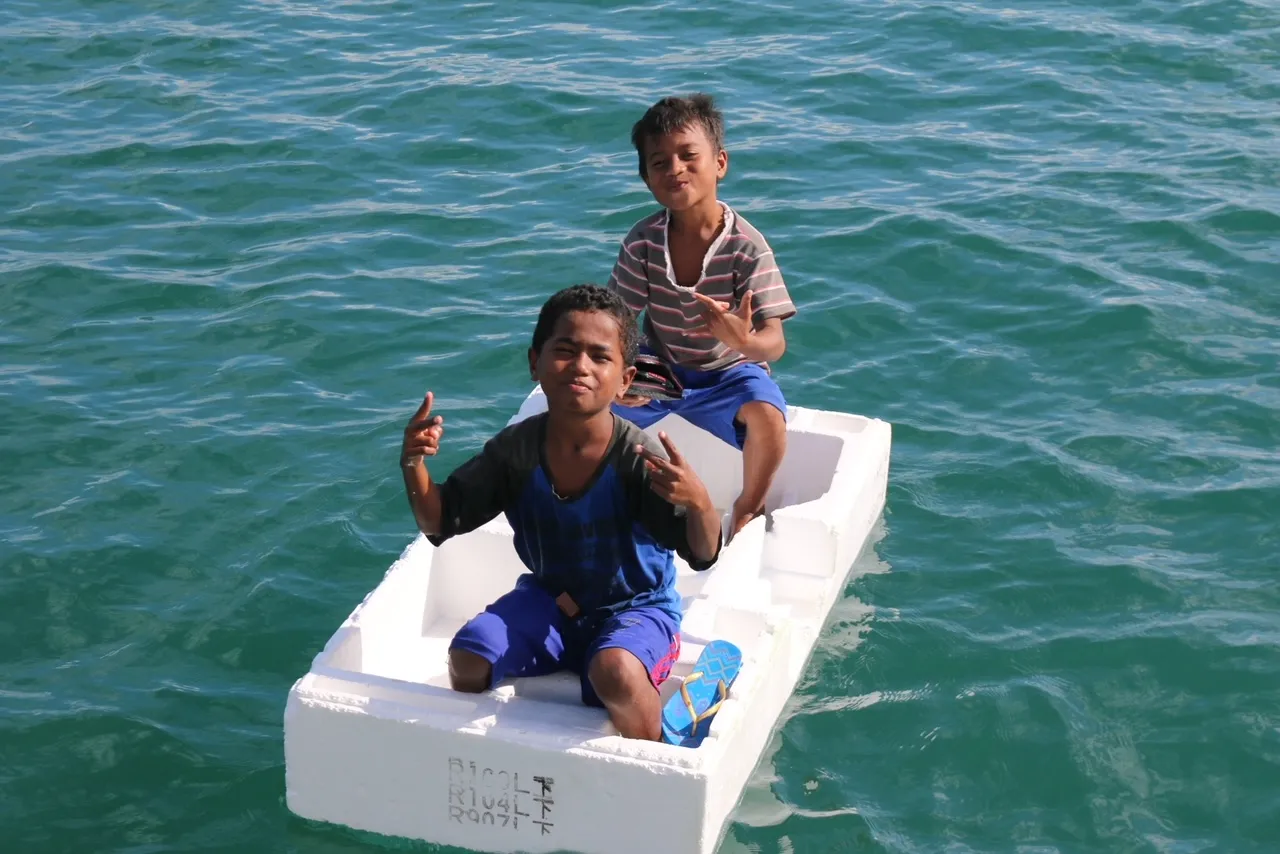
It was a slow sail to Namrole, with light winds, a lot of debris in the water, and numerous sized logs and rubbish. Our port prop caught a palm frond in the early morning hours, so we shut it down and motored on the starboard motor until we had enough light to stop and remove it; we were in 3000 metres of dark blue water. As we approached Namrole Harbour, a small pilot boat was waiting to guide us Into our designated anchorage . We anchored in 1.7m between two small islands and the harbour jetty.
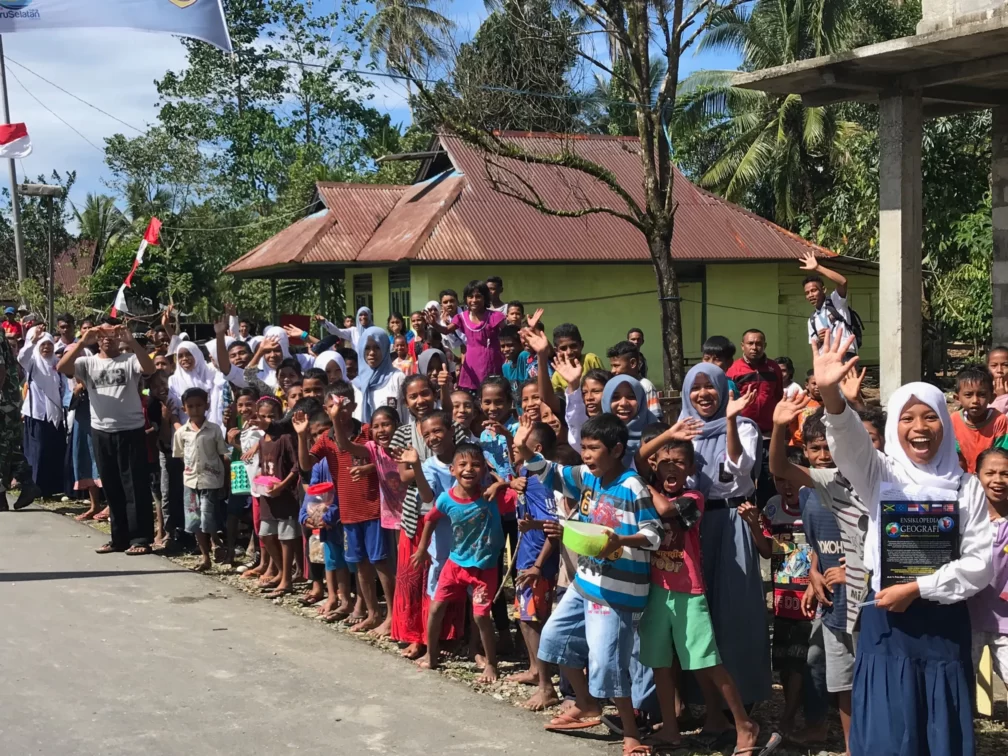
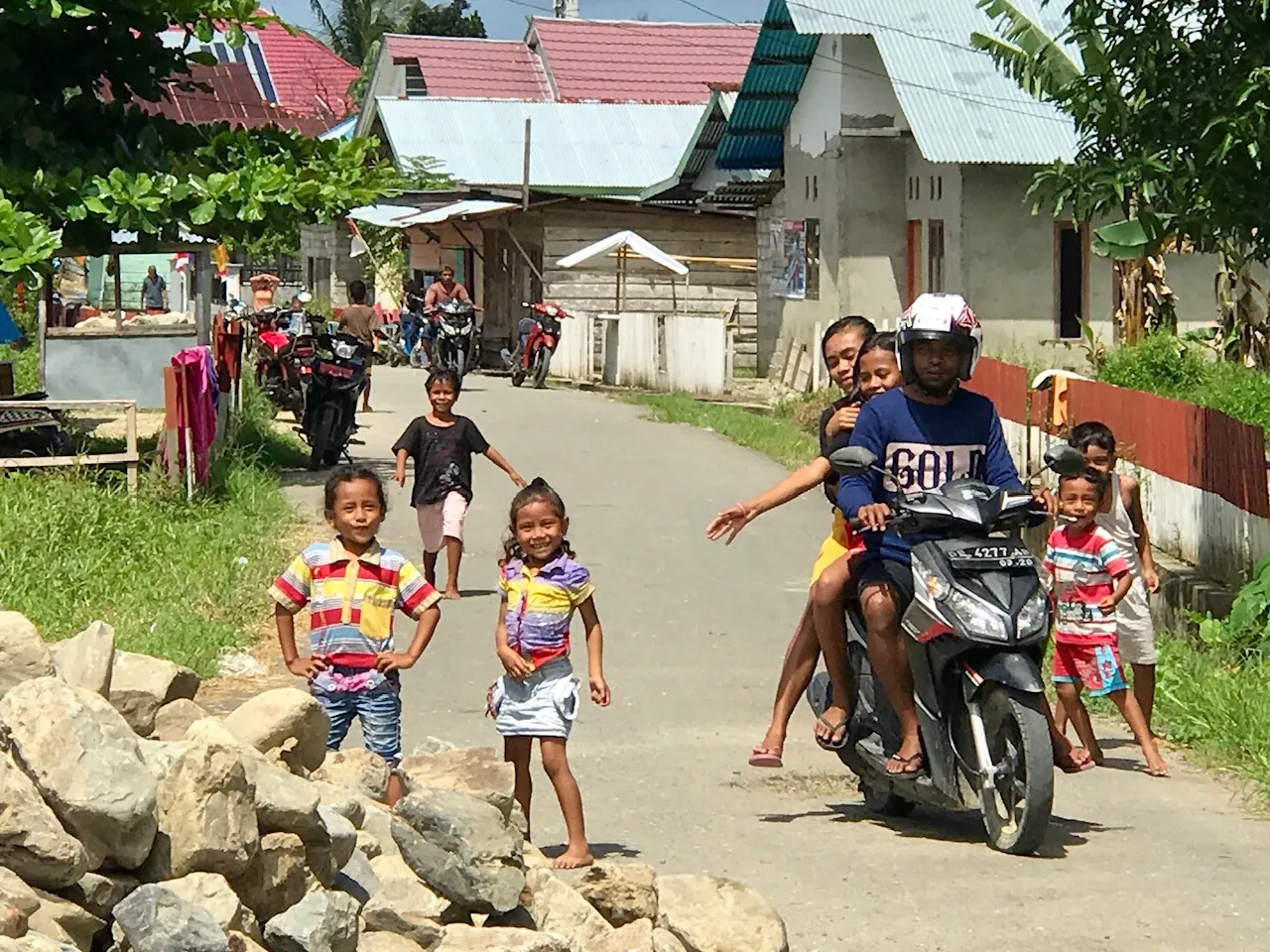
Our first day ashore was easy, a stroll around the local village followed by an entourage of children calling out ‘mister, mister’ with big smiles. We stopped every few minutes for selfies with teenage children. We were looking for an ATM and a shop for milk; luckily, we walked past both. Walking around is a different experience, and footpaths are something you don’t see a lot of.
We often step over deep pit drains (gutters). You share the road with mopeds, cars and sometimes goats, dogs and chickens. That afternoon the Namrole people performed music and traditional dance for the visitors. Each ethnic group have their dance; it is good to see the old traditions of dance and drama being preserved. It was an enjoyable afternoon.
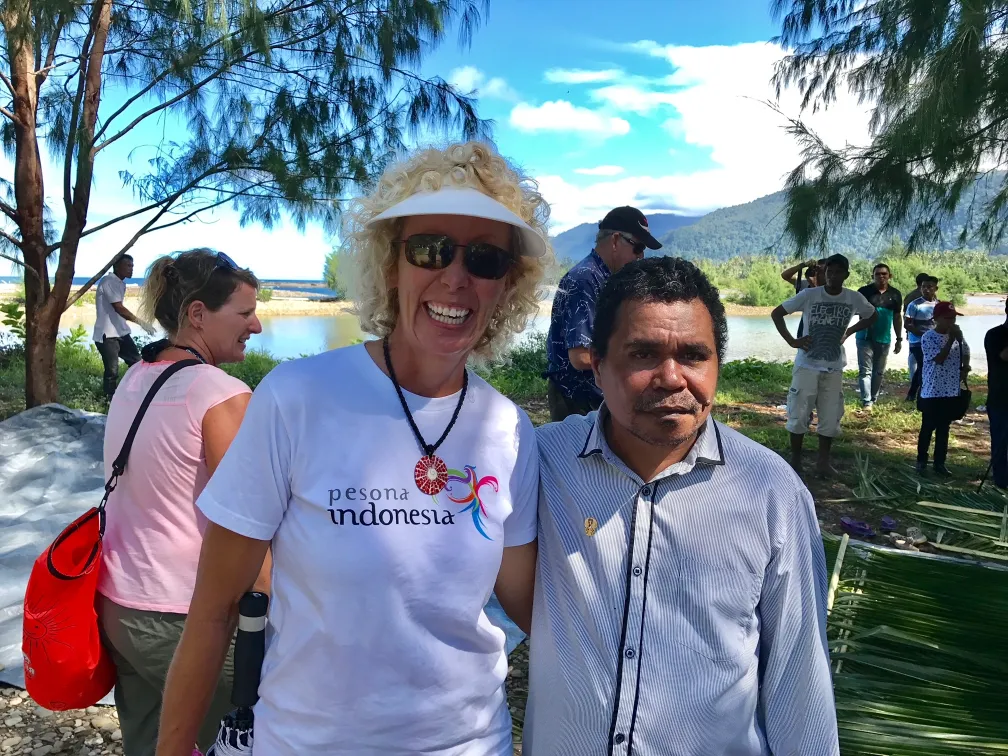
The next day it was a bus trip to a local village at Jalan to meet the village chief. A traditional Indonesian lunch was prepared; the food was laid out on palm leaves and served in bamboo tubes (cut in half) dessert was a freshly prepared coconut sliced in half, and a small piece of shell was sliced from the coconut; you use this as a scoop to eat the coconut.
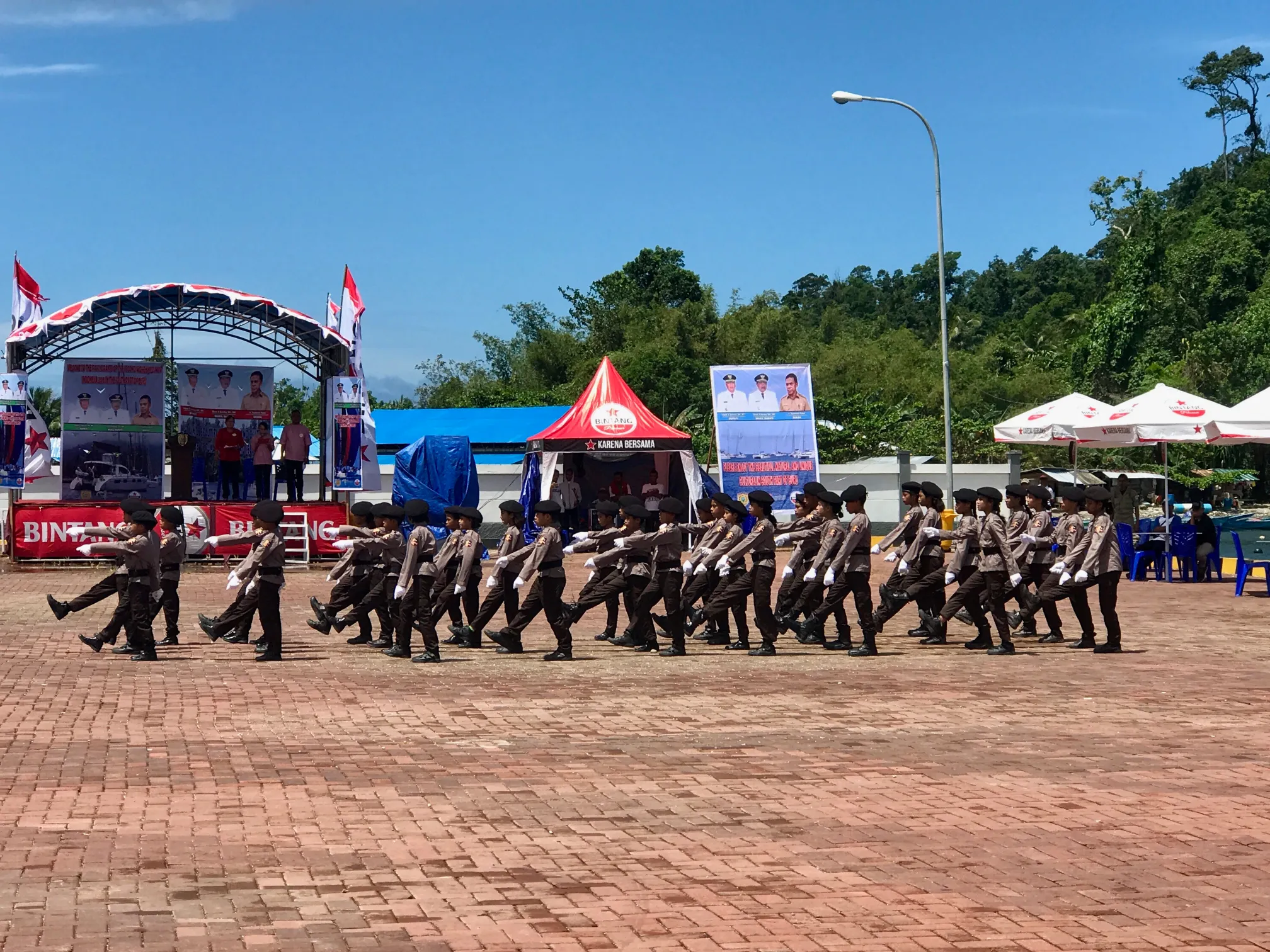
When we arrived back at the harbour, it was time for the welcoming ceremony; after speeches from the officials, the young police cadets showed us their marching skills, and the girls showed off their dancing skills using bamboo poles. Four bamboo poles are used to set the rhythm; the girls work in sync to avoid getting caught between the bamboo; this dance requires good stamina and a lot of confidence. The dancers encourage audience participation – it wasn’t long before we were all up and dancing; it’s easy once you get your head around the steps.
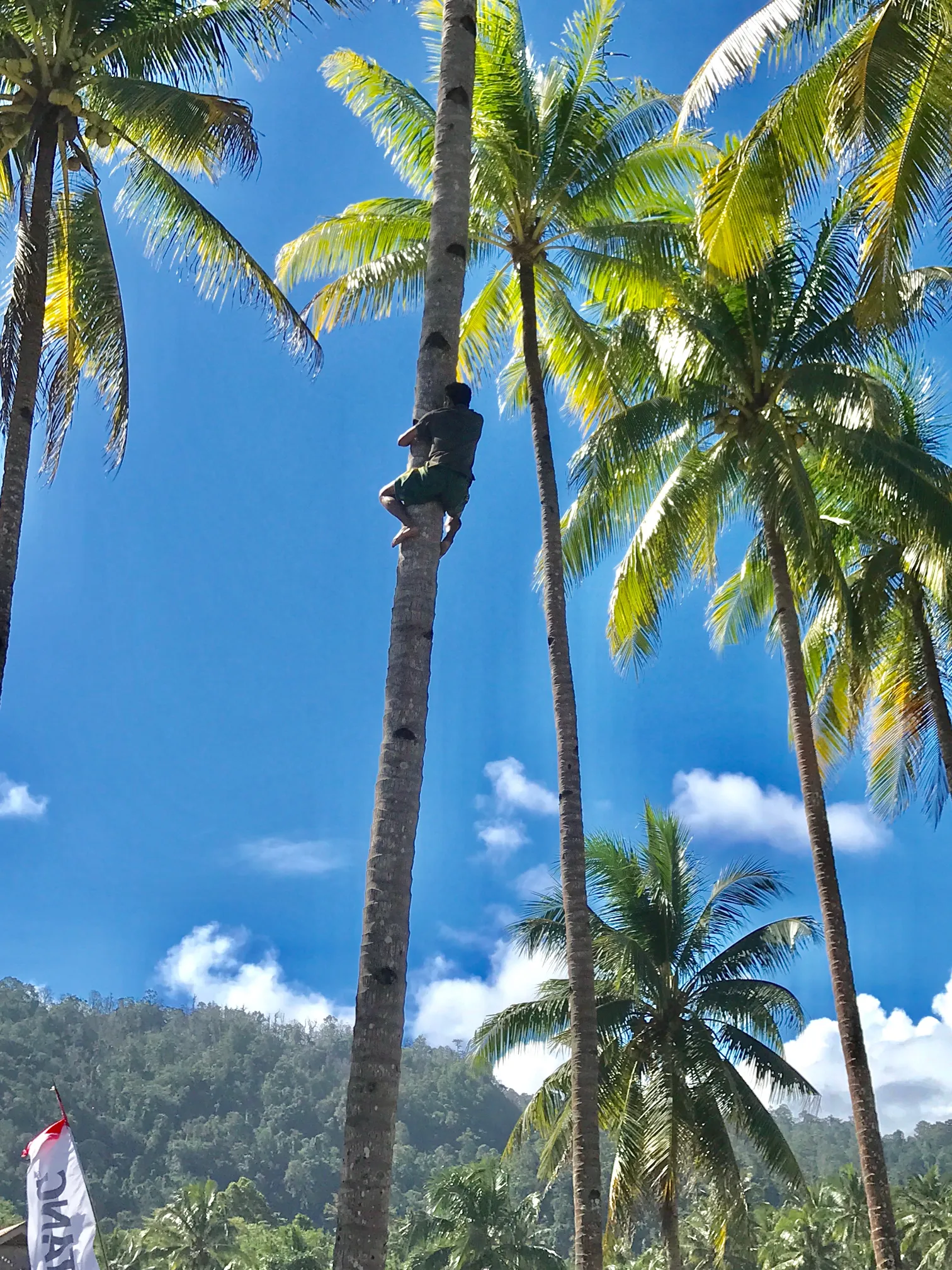
The coconut tree climber contest was the highlight on day three; strength, agility, and speed are what it takes to win. Flags are placed in the palm fronds at the top of the palm; it’s a race to the top, then back down to hand their flag to the judges; it’s all over in minutes.
The final day was an hour’s trip on the bus to Oki Lama, and this village has rarely had visitors. A security truck escorting the bus needed a mechanic to service the motor; thick black smoke was billowing out of the exhaust. The security truck broke down just before we reached Oki Lama. TNavigating the winding hills made us uneasy; a landslide from water runoff left the roads badly damaged with numerous washouts. Driving along the narrow mountain road was both nerve-wracking and exhilarating.
Navigating the winding hills made us uneasy; a landslide from water runoff left the roads badly damaged with numerous washouts. Driving along the narrow mountain road was both nerve-wracking and exhilarating.
Upon the bus’s arrival in the village, we were greeted by an overwhelming sight: 3000 people eagerly welcoming us. It’s hard to convey the experience unless you witnessed it—joyful faces, numerous selfies, and the curious pinches from those who had never been so close to someone with white skin
A little about more dance:
Each ethnic group has their dances; Indonesia has over 3,000 original Indonesian dances. The old traditions of dance and drama are being preserved in the many dance schools, which flourish not only in the courts but also in the modern, government-run or supervised art academies.
*Bintang Beer was a major sponsor of shore activities and set up macaques and a beer tent for the upcoming cultural events.