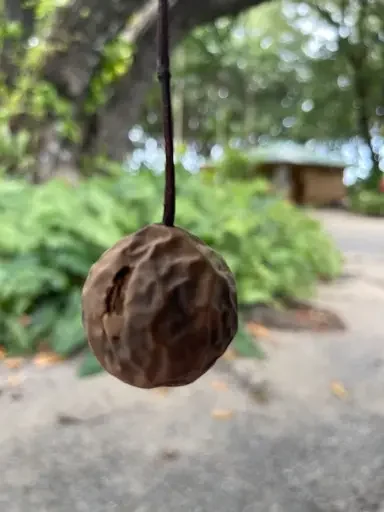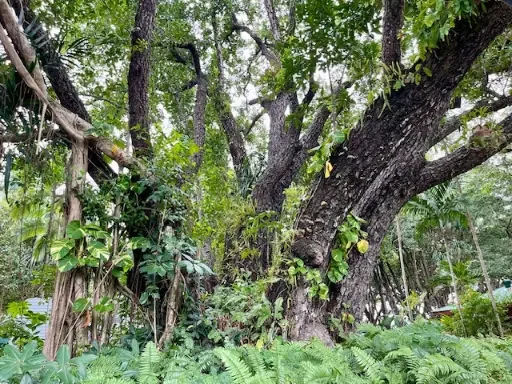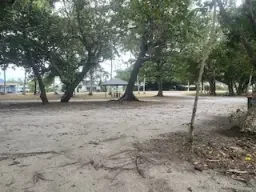

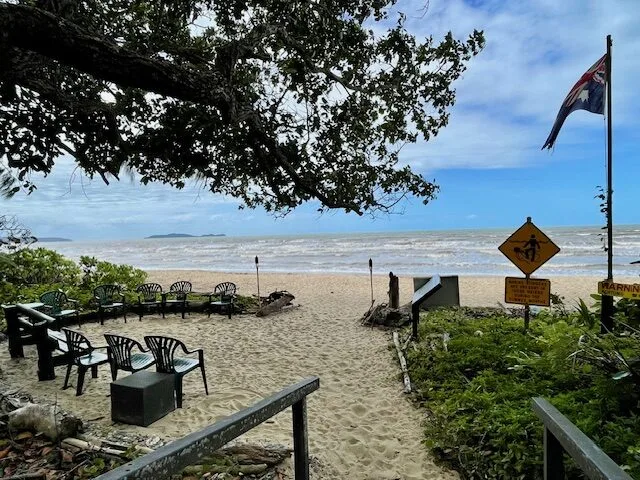
This beautiful beachfront park is located at Wonga Beach. When we arrived, it was quite windy, but the Wonga trees and palm trees helped provide a natural windbreak. We were grateful for the shade offered by the trees, although they produce seed pods after blooming, which eventually fall from the branches. This happened on our first night in the caravan. Just as we were about to fall asleep, we heard a loud thud on the roof. Fortunately, there was no damage, but the noise startled us. Do not eat the Wonga Tree Nuts they are toxic.
We selected this area as our base for exploring the Cape Tribulation region. Earlier this year, heavy rains caused significant landslides and road damage, resulting in ongoing roadworks.
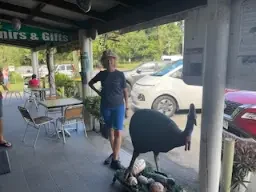
We took a day trip to Daintree and enjoyed coffee and cake at the Crocodile Cafe. We also purchased some souvenirs from the Crocodile Express. Inside the shop, there is a 3-meter stuffed crocodile that looked surprisingly lifelike!
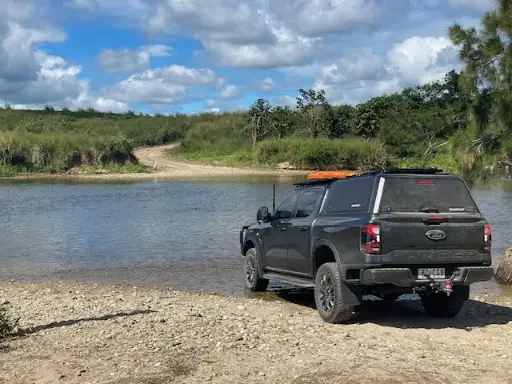
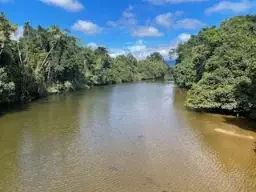
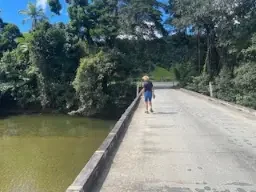
After coffee at the café, we set off on an impromptu adventure along the scenic Daintree River, taking the Upper Daintree Road. The drive was scenic, featuring a winding dirt road that meandered through lush greenery and trees. We searched for crocodiles along the way, but they managed to elude us. Eventually, our exploration led us to a charming little spot along the riverbank, where we realised we had arrived at the start of the CREB 4WD Track, known for its rugged terrain and stunning rainforest scenery.
We had a fantastic time exploring this beautiful region! We enjoyed the stunning mountains and the clear creeks and rivers. You can catch a ferry across the Daintree River to visit Cape Tribulation or take a trip south to Mossman Gorge or Port Douglas.
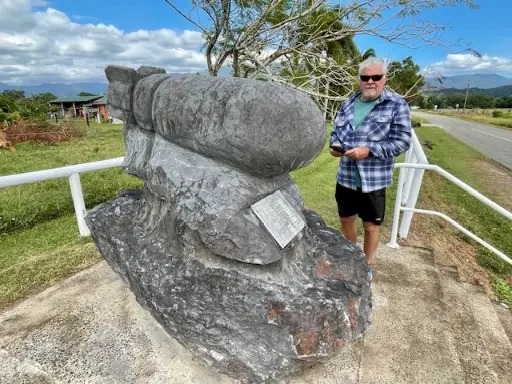
On the way to Wonga Beach, there is a notable point of interest. In 1942, during a tumultuous period in history, eight bombs were dropped over the Douglas Shire, marking a significant event in the region’s past. Today, travelers can find a small statue and a plaque just off the highway, serving as a poignant tribute to that moment in time.
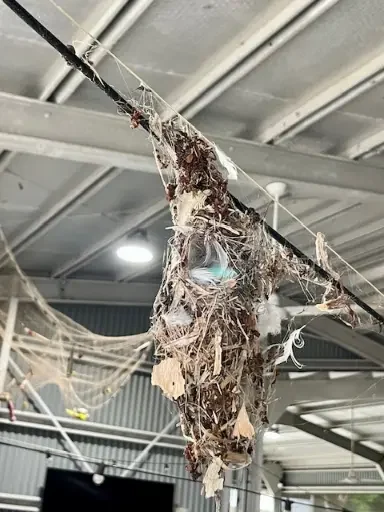
If your lucky you might see the adorable Sunbirds during your stay at the park. While we were there they had begun building their nests on the hanging lights in the recreation room, what an unusual sight to see!
Wonga Nut Tree Facts:
The Wonga Nut Tree, Calophyllum Inophyllum, is native to Asia. The wood was used in traditional shipbuilding. Aside from shipbuilding, Tamanu Oil is extracted from fruit kernels and is used in international medicine. The tree’s sap is poisonous and used to make poisoned arrows. The mature fruit is toxic enough to use as rat bait. The oil also meets major biodiesel requirements in the United States.