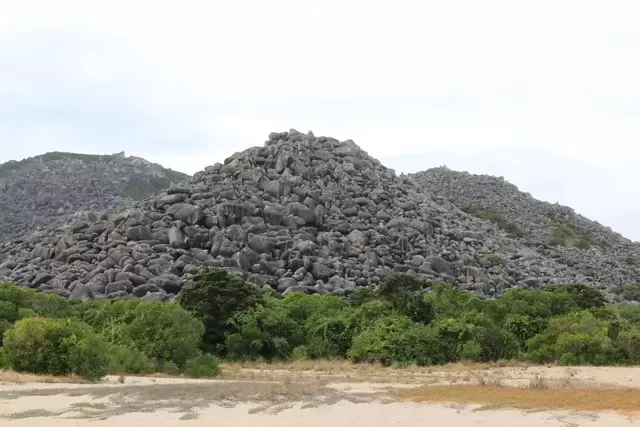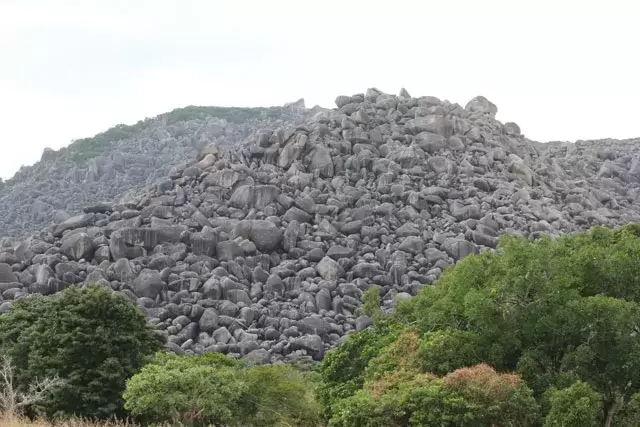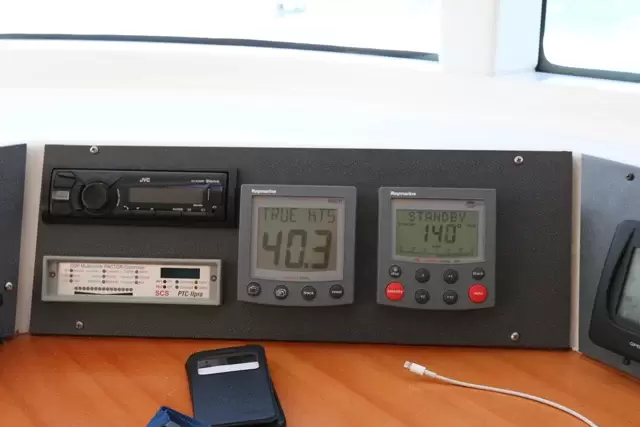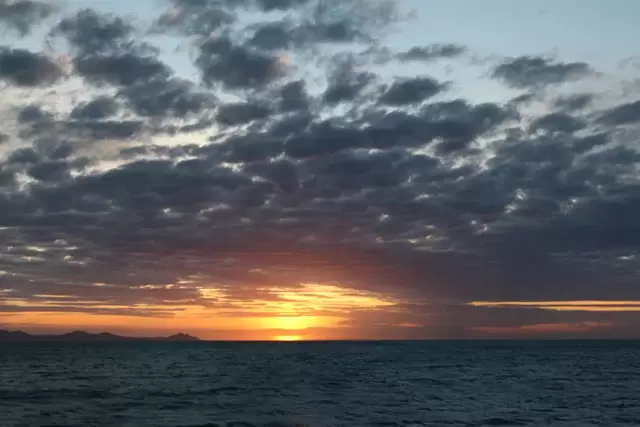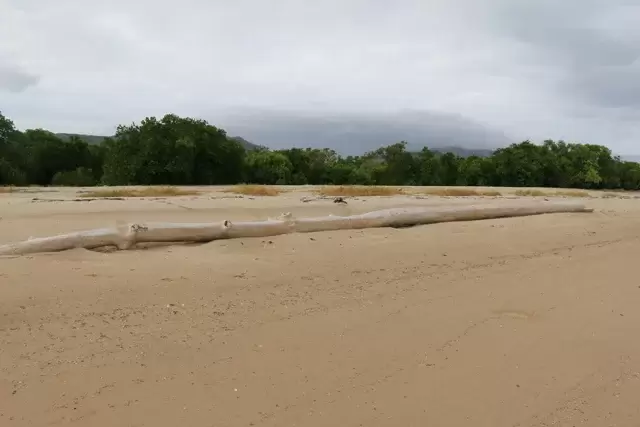

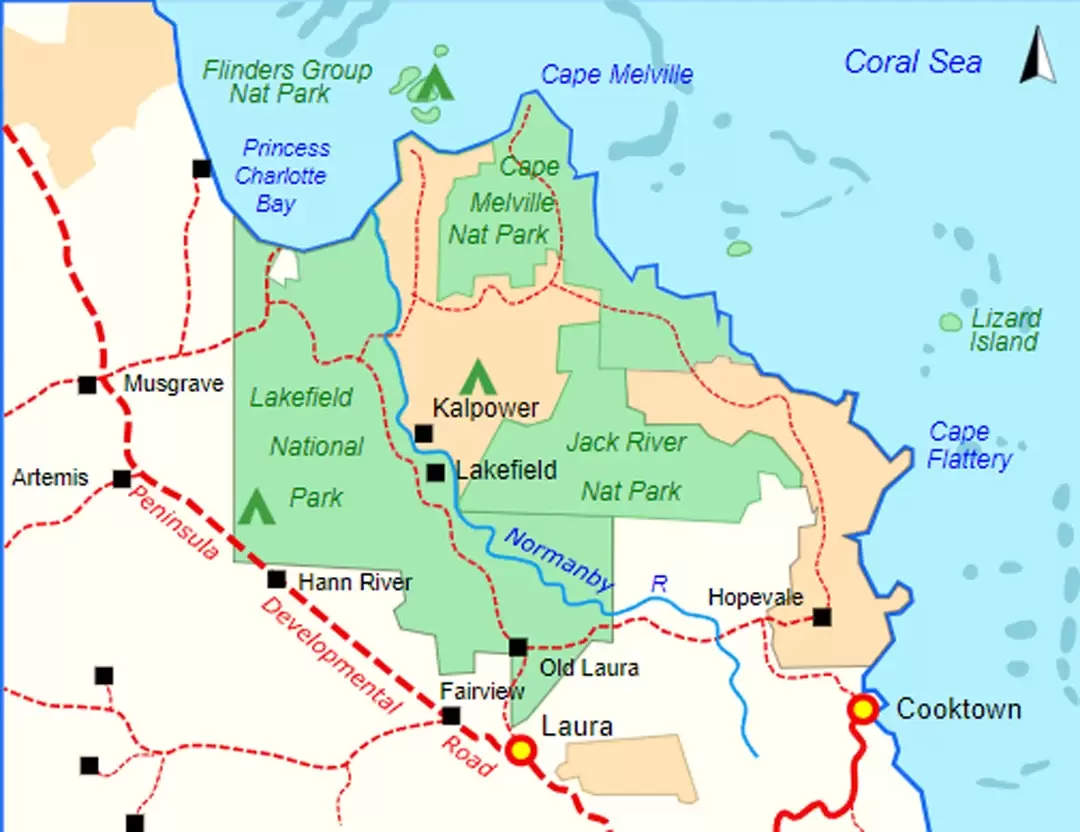
Have you ever come across a pile of rocks that seem to have been strategically placed by some unseen hand? That’s Cape Melville for you. Its granite boulders are not just rocks, they are a testament to the awe-inspiring power of nature. We were drawn in by their sheer size and beauty and couldn’t resist exploring the area. As we ventured further, we discovered a massive tree, a stark reminder of the dangers that could lurk in the water at night while sailing. The anchorage here is known for its gusty winds, a result of the southeast wind that funnels through the hills and emerges on the other side with even greater force, as you can see in the picture with the instrument panel.
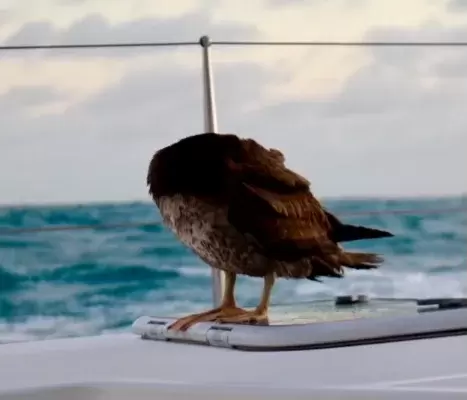
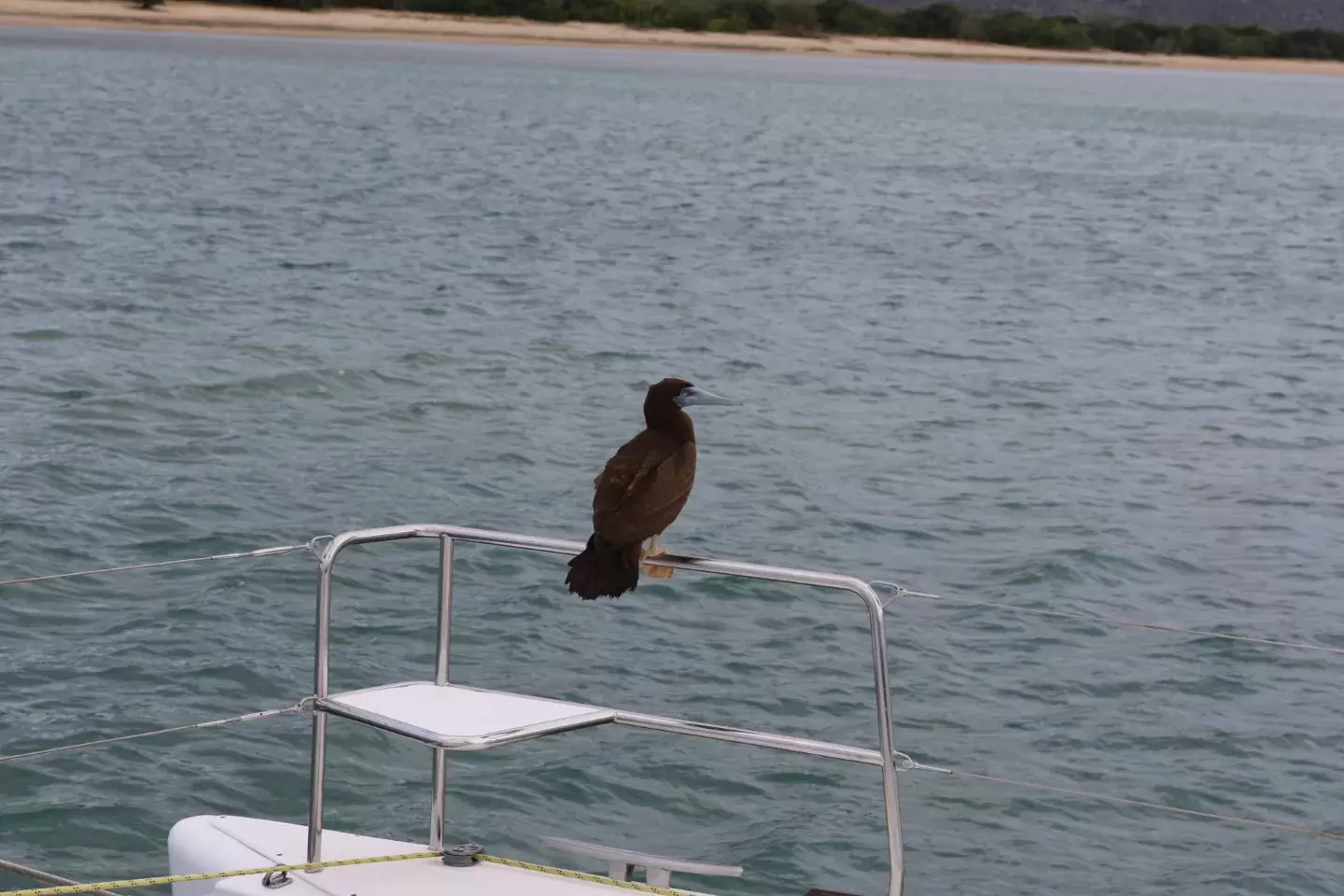
We often have visitors, mainly birds and fish, rather than humans, while sailing. The booby bird pictured circled our vessel several times before landing. Its webbed feet made it difficult for the bird to land on the pushpit. Booby was exhausted from flying, and attempted to land on the wire lifelines at dusk but ended up on the deck. It found a comfortable spot on the deck hatch cover and spent the entire night asleep near the flybridge. It was only disturbed once during our night sail when Mark accidentally bumped into it and got pecked on the leg.
History – Category 5 Cyclone and the devastating loss of life
At Bathurst Bay, near Princess Charlotte Bay (Cape York), on 4th and 5th March 1899, a category five cyclone hit Bathurst Bay with winds reaching approximately 260 km per hour. There was one eye-witness estimate of a storm surge measuring 13m at Ninian Bay adjacent to Barrow Point, 30 km south of Bathurst Bay. Over 100 vessels, part of a pearling fleet, and numerous other crafts were caught in the storm surge. The result was devastating, with at least 307 crew members losing their lives. The storm was relentless, causing 152 vessels to be sunk or wrecked, with some found kilometres inland. It serves as a solemn reminder of the immense power of nature and the vulnerability of human life. (source: https://knowledge.aidr.org.au/resources/cyclone-cyclone-mahina-cape-york-queensland-1899/)