
We departed Charters Towers, and we were on the road again. Flowering wattle trees lined both sides of the road, and Black Kites hovered above the highway, waiting for traffic to pass to scavenge the dead animals on the road.
Solar and wind energy are prominent in this region. As we entered the town, vast solar and wind farms could be seen in the distance.
For the next three days, our home was the Hughenden Terry Allen Caravan Park. It was a drive through site and a easy walk into town.
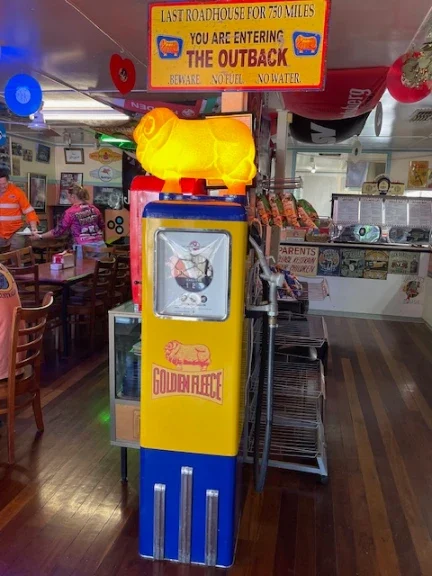
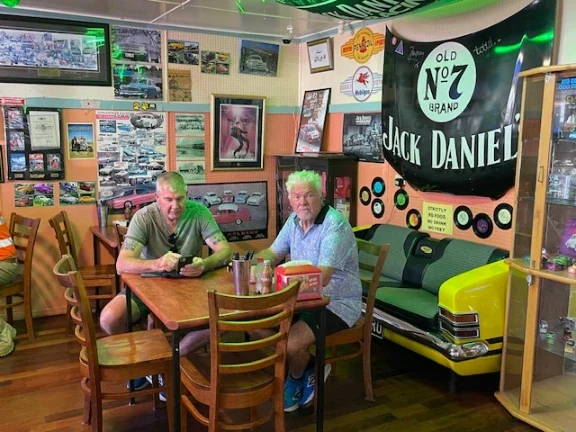
The next day, we kicked off our adventure at the quirky FJ Holden Cafe, where we fueled up on great coffee. We wandered through the main street, where we learned more about the area’s history from the informative signboards.
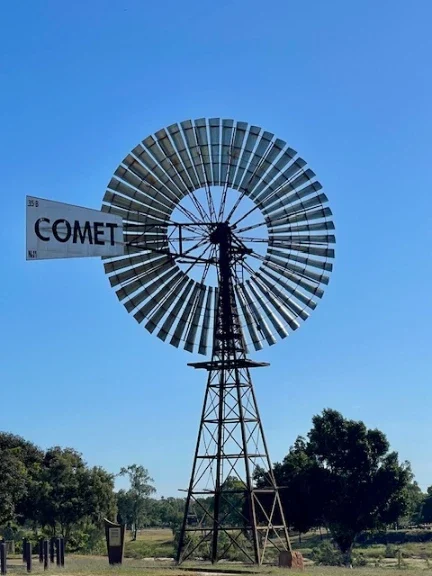
Nestled by the river, you’ll find the charming Wirrila Mill, a 35-foot windmill that’s hard to miss! Pioneers had to find a way to pump water from the underground reservoir before they could settle remote dry regions. It played a vital role in providing water, and what’s neat is that this direct-acting Comet windmill only needs one turn of its wheel to make a pump stroke. It can even start pumping with just the gentlest breeze! These windmills are incredibly low-maintenance, with just three moving parts, and can last for years. It’s an excellent piece of engineering!
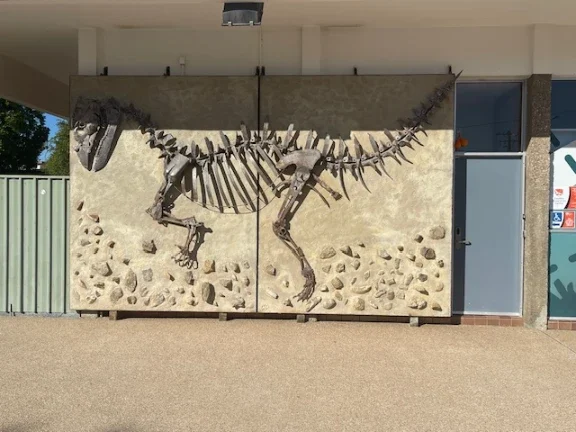
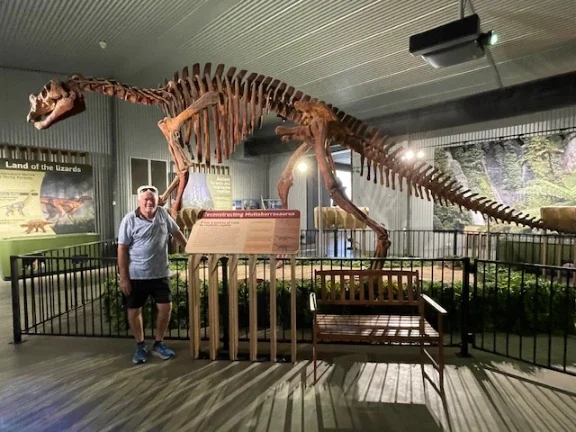
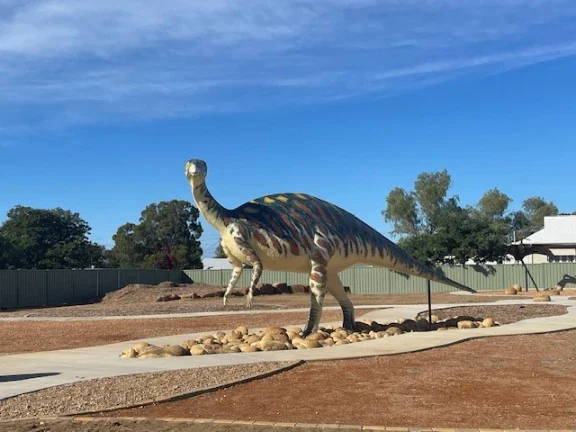
Our next stop was the Flinders Discovery Centre, where Mark was looking forward to a photo shoot with the Muttaburrasaurus skeleton.
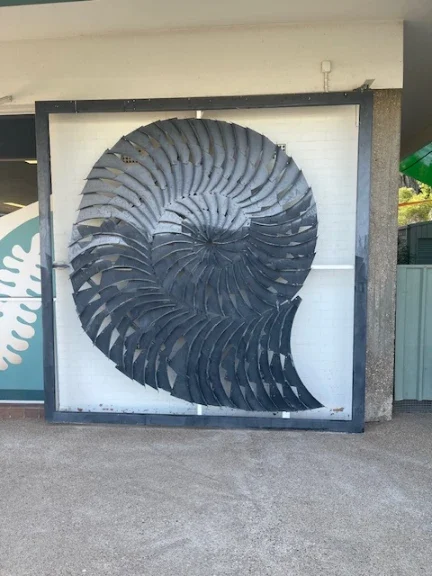
The Discovery centre featured stories about the Flinders region’s past and present and a collection of fossils, including the impressive Muttaburrasaurus skeleton, a testament to the prehistoric giants that once roamed these lands. We were impressed by the interactive exhibits showcasing the tales of early settlers and adventurers who shaped the region’s history.
Packhorse mailmen were common in the early days, but it was a dangerous job. Take a look at the photos and read the story about Mailman Corbett for more insight.
Porcupine Gorge is 70km from Hughenden, it is an incredible spot that dives down 120 meters into the Earth, showcasing nearly 200 million years of fascinating geological history! Mark and I discovered that this remarkable area was uplifted by tectonic forces. Between six and two million years ago, it received a stunning layer of basalt lava from several small volcanoes.This basalt created a tough cap over the elevated land. As Porcupine Creek started to carve its way through the basalt, it discovered softer sedimentary rocks underneath and quickly cut down to form its current level. The strong basalt cap helped to keep the sandstone sides from eroding too quickly, resulting in those stunning vertical walls of the gorge we see today. If you take a closer look at the gorge walls, you’ll see different layers of sedimentary rocks. Two river systems contributed to the major visible layers. The first, dull brown Blantyre Sandstone, was laid down around 170 million years ago!
The next evening, we took a leisurely stroll around the area where we were staying. We couldn’t help but admire the beautiful water tower mural and another colourful mural just a bit further down the road. Along our walk, we also spotted a solar farm and took a moment to say hi to some friendly horses – it was a busy couple of days.